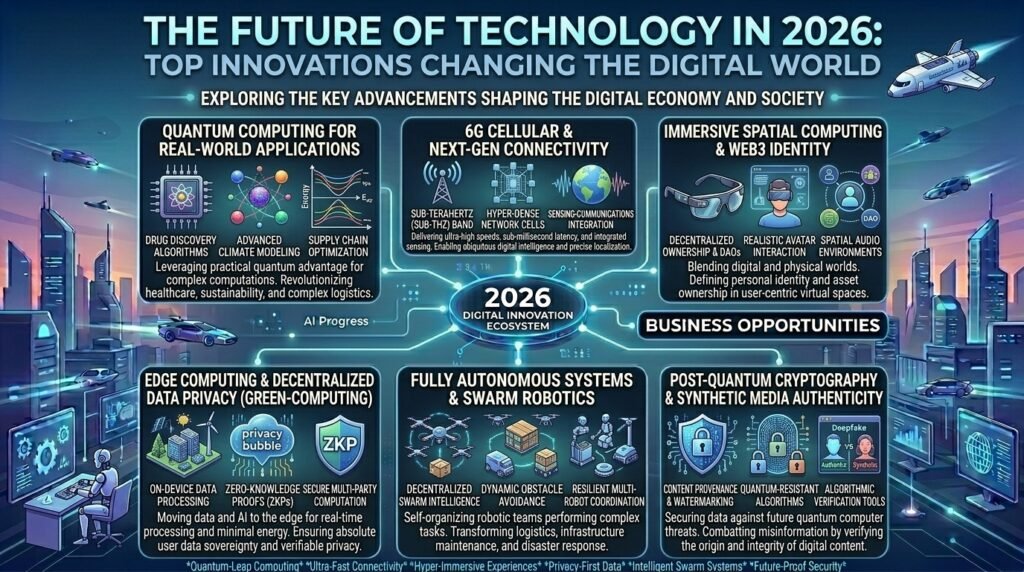
Technology continues to evolve faster than ever, changing how people work, communicate, learn, and do business. The Future of Technology in 2026 is expected to bring powerful innovations that will transform industries and create new opportunities worldwide. From artificial intelligence and automation to advanced connectivity and smart systems, technology will continue shaping the digital world.
In 2026, businesses and individuals will rely more on intelligent tools, data-driven solutions, and digital platforms to improve productivity and make better decisions. Understanding the latest technology trends will help organizations stay competitive in an increasingly digital economy.
Artificial Intelligence Becoming More Powerful
Artificial intelligence (AI) will remain one of the biggest drivers of technological growth in 2026. AI tools are becoming smarter, faster, and more accessible for businesses of all sizes.
Companies will use AI for tasks such as customer support, content creation, data analysis, marketing automation, and decision-making. AI-powered assistants will help professionals save time and improve efficiency.
The growth of generative AI will also change how people create digital content, software, images, and business strategies. As AI technology improves, businesses will focus on using it responsibly while maximizing its benefits.
Automation and Smart Business Solutions
Automation will play a major role in The Future of Technology in 2026. Many businesses will adopt automated systems to reduce repetitive tasks and increase productivity.
From automated marketing campaigns to intelligent business software, companies will use technology to improve operations and deliver better customer experiences.
Small businesses will especially benefit from affordable automation tools that allow them to compete with larger companies. These solutions will help entrepreneurs manage workflows, analyze data, and grow their businesses online.
The Growth of Internet of Things (IoT)
The Internet of Things (IoT) will continue expanding in 2026 by connecting more devices and systems. Smart homes, smart offices, wearable devices, and industrial machines will collect and share information through connected networks.
IoT technology will improve efficiency in areas such as healthcare, transportation, agriculture, and manufacturing. Businesses will use real-time data from connected devices to make faster and smarter decisions.
Advanced Cybersecurity Technology
As digital systems grow, cybersecurity will become more important than ever. In 2026, organizations will invest in advanced security solutions to protect sensitive information and prevent cyber threats.
AI-powered cybersecurity tools will help detect unusual activities, identify risks, and respond to attacks more quickly. Strong security practices will become essential for businesses operating online.
The Expansion of Cloud Computing
Cloud computing will continue supporting digital transformation in 2026. More businesses will move their applications, data, and services to cloud platforms because of flexibility, scalability, and cost savings.
Cloud technology allows companies to work remotely, collaborate globally, and access powerful digital tools without expensive infrastructure.
The combination of cloud computing and AI will create even more advanced solutions for businesses and organizations.
The Development of 5G and Faster Connectivity
Faster internet connections will support many emerging technologies in 2026. The expansion of 5G networks will improve communication speed, reduce delays, and enable more connected devices.
Industries such as healthcare, transportation, entertainment, and manufacturing will benefit from faster and more reliable digital connections.
Better connectivity will also support remote work, online education, and global digital services.
The Rise of Digital Transformation
Digital transformation will remain a priority for businesses in 2026. Companies will continue adopting new technologies to improve customer experiences, increase efficiency, and create new revenue opportunities.
Organizations that embrace digital innovation will have a stronger advantage in the competitive market. Technology will no longer be just a support tool but a key part of business growth strategies.
Sustainable Technology Innovations
Environmental challenges are encouraging the development of sustainable technology. In 2026, companies will focus on solutions that reduce energy consumption and support a greener future.
Renewable energy technology, smart energy systems, and efficient digital infrastructure will become more important as organizations look for environmentally friendly solutions.
How Technology Will Change Everyday Life
The Future of Technology in 2026 will impact everyday activities, from communication and shopping to healthcare and education.
People will experience more personalized digital services, smarter devices, and faster access to information. Technology will make many tasks easier while creating new ways for people to connect and collaborate.
Conclusion
The Future of Technology in 2026 will be defined by artificial intelligence, automation, smart devices, cybersecurity, cloud computing, and digital transformation. These innovations will reshape businesses, industries, and everyday life.
As technology continues advancing, individuals and organizations that understand and adapt to these changes will be better prepared for future opportunities. The digital world of 2026 will bring new possibilities, making technology one of the most important forces shaping the future.
The Impact of Artificial Intelligence on Different Industries
One of the biggest changes in The Future of Technology in 2026 will be the wider use of artificial intelligence across different industries. AI will not only support technology companies but will also improve healthcare, finance, education, retail, and many other sectors.
In healthcare, AI will help doctors analyze medical information, improve patient care, and support faster decision-making. In finance, AI systems will help businesses detect fraud, analyze market trends, and provide personalized services.
Education will also experience major improvements through AI-powered learning platforms. Students will have access to personalized learning experiences that match their needs and learning styles.
The Growth of Robotics and Intelligent Machines
Robotics will continue developing in 2026 as machines become more advanced and capable of performing complex tasks. Businesses will use intelligent robots in manufacturing, logistics, healthcare, and customer service.
Robots will help companies improve productivity, reduce operational challenges, and complete tasks with greater accuracy. In warehouses and factories, automated machines will improve efficiency and support workers.
The combination of robotics and AI will create smarter machines that can learn, adapt, and work alongside humans.
Blockchain Technology Beyond Cryptocurrency
Blockchain technology will continue growing beyond digital currencies. In 2026, more businesses will explore blockchain solutions for security, transparency, and data management.
Industries such as banking, supply chain management, healthcare, and digital identity systems will benefit from blockchain applications.
The technology will help organizations create more secure digital transactions and improve trust between businesses and customers.
Virtual Reality and Augmented Reality Innovation
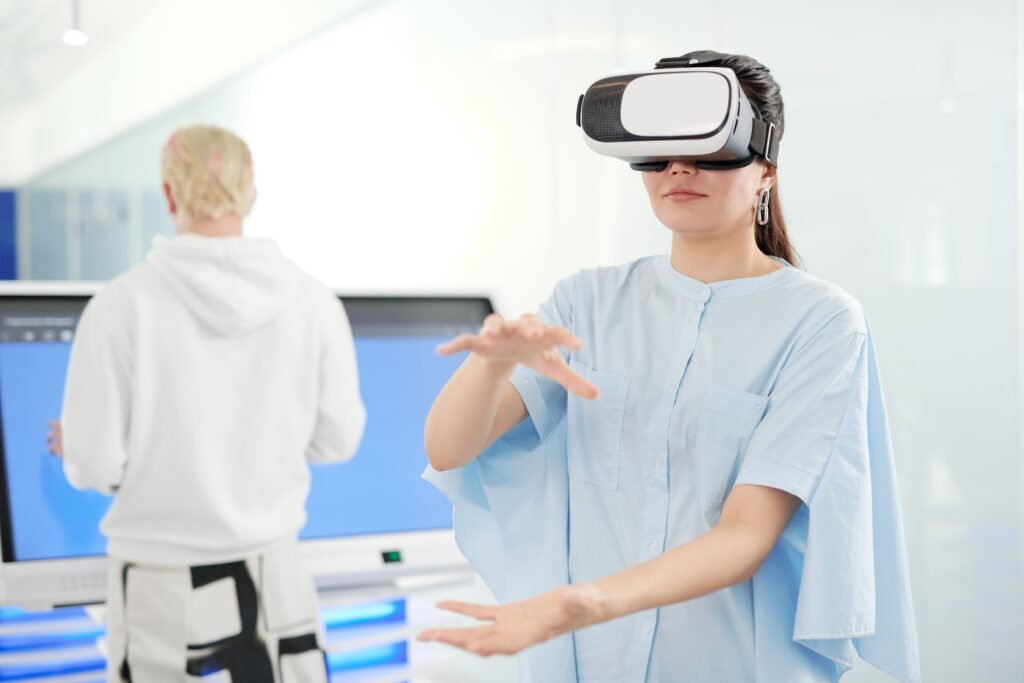
Virtual Reality (VR) and Augmented Reality (AR) will become more useful in business, education, entertainment, and training.
Companies will use AR and VR technologies to create interactive experiences for customers and employees. For example, businesses can provide virtual product demonstrations, while educational organizations can create immersive learning environments.
As devices become more affordable and powerful, these technologies will become a larger part of everyday digital experiences.
The Future of Remote Work Technology
Remote and hybrid work will continue growing in 2026, supported by advanced digital collaboration tools. Businesses will use technology platforms that improve communication, project management, and teamwork.
AI-powered productivity tools will help employees organize tasks, manage schedules, and complete work more efficiently.
The future workplace will depend on flexible technology solutions that allow teams to work from anywhere in the world.
Personalized Digital Experiences
Technology in 2026 will focus more on personalization. Companies will use AI and data analytics to understand customer behavior and provide customized experiences.
Online shopping platforms, marketing systems, and entertainment services will use intelligent recommendations to deliver more relevant content.
Personalization will help businesses build stronger relationships with customers and improve user satisfaction.
The Importance of Data Technology
Data will become one of the most valuable resources in the digital economy. Businesses will use advanced data analytics tools to understand trends, predict customer needs, and make better decisions.
Big data technologies will help organizations process large amounts of information quickly and turn it into useful insights.
Companies that effectively manage and protect their data will have a competitive advantage in the future.
Preparing for the Technology Future
To succeed in the changing digital world, businesses and individuals must continue learning about new technologies. Digital skills, cybersecurity awareness, and technology adaptation will become increasingly important.
Organizations should invest in modern tools, employee training, and innovative strategies to remain competitive.
The future will belong to those who can combine human creativity with advanced technology.
Conclusion
The next generation of technology will create significant changes across industries and daily life. The Future of Technology in 2026 will be driven by AI, robotics, blockchain, immersive technologies, and advanced digital solutions.
These innovations will create new opportunities, improve efficiency, and transform the way people interact with the digital world. Understanding these trends will help businesses and individuals prepare for a smarter and more connected future.
AI-Powered Business Growth and Digital Innovation
As businesses continue adapting to new digital environments, AI-powered solutions will become essential for growth. The Future of Technology in 2026 will focus on using artificial intelligence to improve customer experiences, increase productivity, and create smarter business strategies.
Companies will use AI tools for marketing automation, customer relationship management, sales forecasting, and business analysis. These technologies will help businesses understand their customers better and make faster decisions based on real-time data.
Small businesses and entrepreneurs will also benefit from affordable AI solutions that allow them to compete in the digital marketplace.
The Evolution of Mobile Technology
Mobile technology will continue advancing in 2026, with smartphones becoming more powerful and intelligent. Mobile devices will provide improved performance, better security, and more advanced features.
Applications will become smarter through AI integration, offering users personalized experiences based on their preferences and behavior.
Mobile technology will remain a major part of digital communication, online shopping, financial services, and business operations.
Edge Computing and Faster Data Processing
Edge computing will become increasingly important as organizations require faster data processing. Instead of sending all information to distant cloud servers, edge computing processes data closer to where it is created.
This technology will improve speed, reduce delays, and support real-time applications such as autonomous vehicles, smart cities, and industrial automation.
The combination of edge computing, AI, and IoT will create more powerful digital systems.
Smart Cities and Connected Infrastructure
Smart cities will become a major technology trend in 2026. Governments and organizations will use digital solutions to improve transportation, energy management, public services, and urban planning.
Connected sensors and AI systems will help cities use resources more efficiently and provide better services to citizens.
Smart infrastructure will support safer, cleaner, and more sustainable communities.
The Future of Digital Payments
Digital payment technology will continue growing as more people and businesses move toward cashless transactions. In 2026, payment systems will become faster, safer, and more convenient.
AI security systems and advanced authentication methods will help protect online financial activities.
Businesses will continue adopting digital payment solutions to provide customers with easier and more flexible payment options.
Quantum Computing Development
Quantum computing will remain one of the most advanced areas of technology research. While still developing, quantum computers have the potential to solve complex problems that traditional computers cannot handle efficiently.
Industries such as healthcare, scientific research, cybersecurity, and finance may benefit from future quantum computing applications.
As this technology progresses, it could create new possibilities for solving global challenges.
The Role of Technology in Healthcare
Healthcare technology will experience significant growth in 2026. Digital health platforms, AI diagnostics, wearable devices, and remote healthcare services will improve how medical services are delivered.
Patients will have easier access to health information, while healthcare professionals will use technology to provide more efficient services.
Technology will continue supporting better healthcare experiences through innovation and improved data management.
Digital Skills for the Future Workforce
As technology changes industries, digital skills will become more important. Workers will need knowledge of AI tools, data management, cybersecurity, and digital communication.
Companies will invest more in employee training to help teams adapt to new technologies.
Learning and improving technology skills will create more opportunities in the future job market.
The Future of Online Business and E-Commerce
E-commerce will continue evolving with the help of AI, automation, and personalized shopping experiences. Online businesses will use technology to improve customer service, product recommendations, and marketing strategies.
AI chatbots, smart inventory systems, and advanced analytics will help online businesses operate more efficiently.
The future of online business will depend on combining technology with strong customer-focused strategies.
Conclusion
Technology in 2026 will continue creating new opportunities across business, healthcare, education, and everyday life. The Future of Technology in 2026 will be shaped by intelligent systems, faster connectivity, automation, and digital innovation.
Businesses and individuals who understand these changes and adopt new technologies will be better prepared for the future. The digital world will continue expanding, creating a more connected, efficient, and intelligent society.
The Importance of Responsible Technology Development
As technology becomes more powerful, responsible innovation will become increasingly important. The Future of Technology in 2026 will not only focus on creating advanced tools but also on using technology safely and ethically.
Companies will need to consider issues such as data privacy, cybersecurity, and responsible AI development. Building trust between technology providers and users will become a key factor in the success of digital solutions.
Responsible technology practices will help ensure that innovation benefits individuals, businesses, and society.
The Growth of AI Assistants and Digital Helpers
AI assistants will become more common in both personal and professional environments. In 2026, intelligent digital assistants will help users manage tasks, organize information, and improve productivity.
Businesses will use AI assistants to support customer service, automate communication, and provide faster solutions to customer needs.
These tools will help people save time and focus on more creative and strategic activities.
The Expansion of Green Technology
Environmental sustainability will influence many technology decisions in 2026. Green technology solutions will help organizations reduce energy use, lower costs, and support environmental goals.
Renewable energy systems, energy-efficient devices, and sustainable digital infrastructure will become more important.
Technology companies will focus on creating solutions that balance innovation with environmental responsibility.
Advanced Learning Through Educational Technology
Education will continue changing through digital innovation. Online learning platforms, AI tutors, and interactive learning tools will provide new ways for students and professionals to gain knowledge.
Technology will make education more accessible by allowing people to learn from anywhere at any time.
In the future, digital skills and continuous learning will become essential for career development.
The Future of Marketing Technology
Marketing will become more technology-driven in 2026. Businesses will use AI, automation, and data analytics to create more effective marketing campaigns.
AI-powered tools will help companies understand customer behavior, improve content strategies, and deliver personalized messages.
Digital marketing professionals will need to combine creativity with technology skills to succeed in the modern marketplace.
The Role of Technology in Entrepreneurship
Technology will create more opportunities for entrepreneurs in 2026. Digital platforms, AI tools, and online business solutions will allow individuals to start and grow businesses with fewer resources.
Entrepreneurs will use technology for product development, customer management, marketing, and global expansion.
The accessibility of digital tools will continue supporting the growth of small businesses worldwide.
Stronger Digital Security and Privacy Protection
With increasing dependence on digital systems, protecting information will become a top priority. Businesses will invest in advanced cybersecurity technologies to protect customers and company data.
AI-based security systems will help identify threats faster and improve digital protection.
Privacy-focused technologies will also become more important as users demand greater control over their personal information.
The Future of Human and Technology Collaboration
The future of technology will not replace human creativity but will enhance human abilities. In 2026, people and intelligent systems will work together to solve problems and create new opportunities.
Technology will handle repetitive tasks, while humans will focus on creativity, innovation, and decision-making.
This collaboration will define the next stage of digital transformation.
Preparing for a Digital Future
To succeed in the technology-driven world of 2026, businesses and individuals must stay updated with emerging trends. Learning new skills, adopting useful tools, and understanding digital changes will become essential.
Organizations that embrace innovation will have better opportunities to grow and compete globally.
The ability to adapt will be one of the most valuable skills in the future.
Final Conclusion
The Future of Technology in 2026 represents a new era of digital transformation driven by artificial intelligence, automation, smart systems, cybersecurity, and advanced connectivity.
These innovations will change how people work, communicate, learn, and build businesses. Technology will continue creating new possibilities while improving efficiency and solving complex challenges.