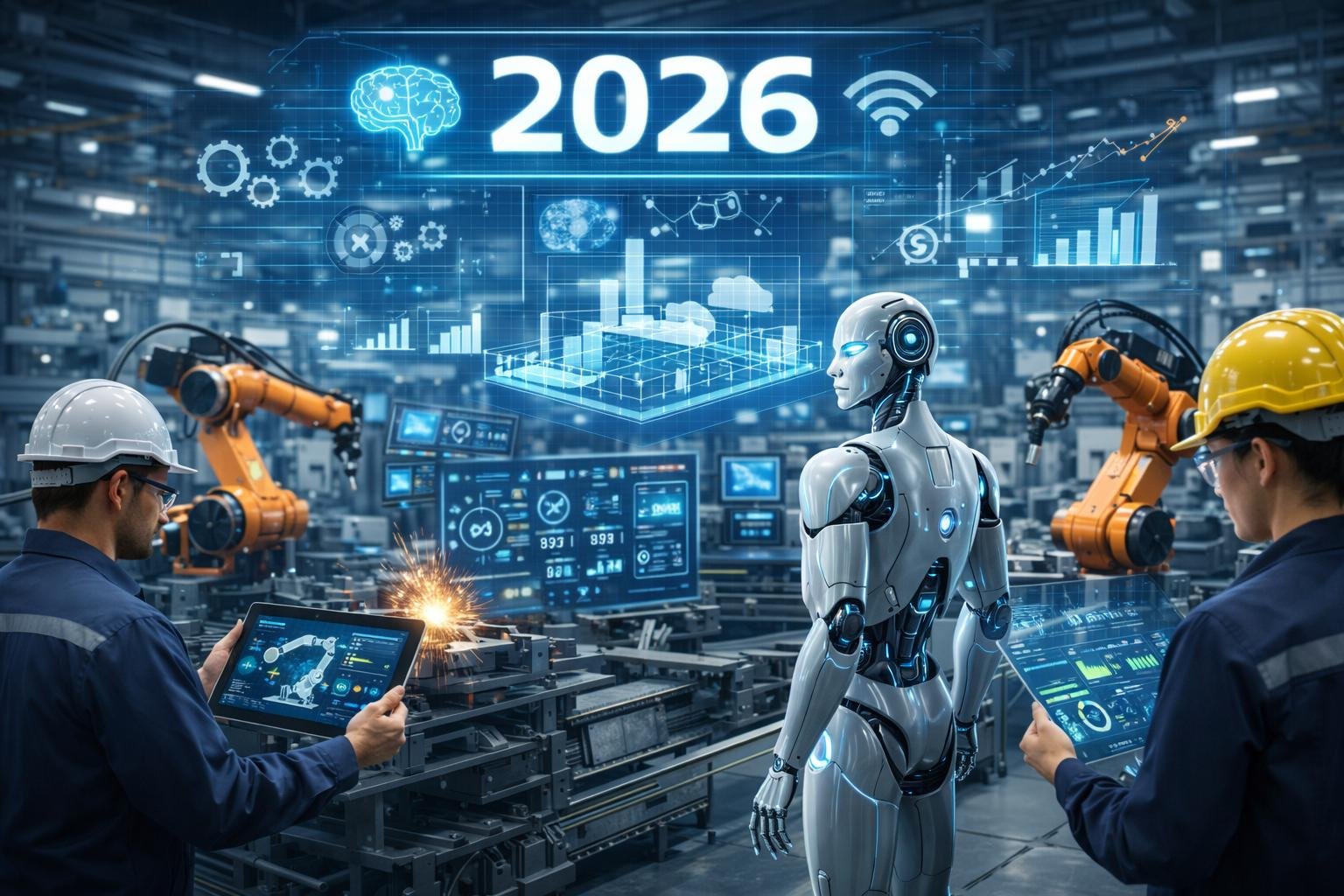

Technology is changing rapidly, but not every new invention becomes useful in the real world. New modern technology in 2026 is increasingly focused on making artificial intelligence more practical, connecting physical devices, improving automation, increasing computing capabilities, and addressing challenges in areas such as energy and infrastructure.
For individuals, businesses, educators, engineers, and entrepreneurs, understanding these developments can help with better decisions about digital tools, investments in equipment, skills, and business opportunities.
This guide explains some of the most important modern technologies to understand in 2026, what they can do, where they are being used, and what limitations people should consider.
What Is New Modern Technology in 2026?
The term new modern technology covers technologies that are newly emerging, rapidly improving, or becoming more widely adopted.
Some technologies have existed for years but are becoming significantly more capable in 2026. Artificial intelligence is a good example. AI is not new, but recent advances in generative AI, multimodal systems, automation, and AI-powered software are changing how people interact with computers.
Other technologies, such as advanced robotics, newer battery systems, spatial computing, and quantum computing, are developing along different timelines.
The important point is that technology adoption is not the same as technology invention. A technology can exist for years before it becomes affordable, reliable, or practical enough for widespread use.

1. Artificial Intelligence and Generative AI
Artificial intelligence remains one of the most important technology areas in 2026.
Modern AI systems can work with different types of information, including text, images, audio, video, and software code. Generative AI can assist with writing, research, programming, design, data analysis, customer service, and other tasks.
How AI Is Being Used
Businesses can use AI for tasks such as:
- Drafting and editing documents
- Customer-service assistance
- Data analysis
- Software development
- Marketing research
- Content organization
- Document summarization
- Workflow automation
Individuals can also use AI for learning, brainstorming, translation, planning, and productivity.
The Limitations of AI
AI should not automatically be treated as an authority.
AI systems can produce incorrect information, misunderstand context, or generate confident answers that require verification. Businesses also need to consider privacy, security, intellectual-property issues, and the handling of confidential information.
The most practical approach is to use AI as an assistant while keeping human review for important decisions.
2. AI Agents and Intelligent Automation
One of the more significant developments around AI is the movement from simple question-and-answer systems toward AI agents.
An AI agent can be designed to perform a sequence of tasks rather than simply generate a response.
For example, an agent might help organize information, analyze a document, prepare a report, or interact with approved software systems.
Why AI Agents Matter
Traditional software generally waits for a person to select an action.
Agent-based systems can potentially handle multiple steps based on a defined objective.
For businesses, this could reduce repetitive administrative work.
However, more autonomy also creates additional risks. Agents need appropriate permissions, monitoring, security controls, and clear boundaries. Giving an AI system unrestricted access to important business systems without adequate safeguards can create unnecessary security and operational risks.
3. Humanoid and Industrial Robotics
Robotics is another major area of modern technology.
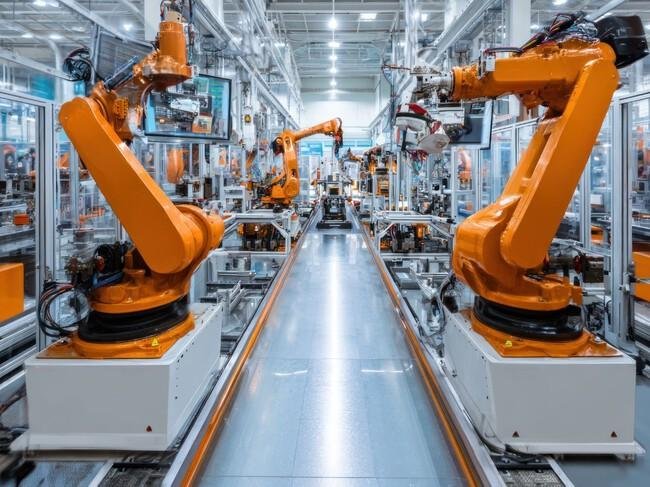
Industrial robots have already been used extensively in manufacturing, warehouses, and other controlled environments. Newer developments are focusing on robots that can perform a broader range of physical tasks.
Humanoid robots are particularly interesting because their human-like body structure could allow them to operate in environments designed for people.
Potential Applications
Robotics can support:
- Manufacturing
- Warehousing
- Logistics
- Agriculture
- Inspection
- Construction
- Laboratory work
- Repetitive physical tasks
The technology is still developing, and practical deployment depends on cost, reliability, safety, maintenance, and the specific environment.
A robot that performs well in a controlled factory may face much greater challenges in a crowded, unpredictable environment.

New Modern Technology 2026: The Most Important Technologies to Know
4. Advanced Battery and Energy Technology
Energy technology is becoming increasingly important as electricity demand grows and more devices, vehicles, and systems depend on electrical power.
Battery technology is evolving in several directions, including improvements in battery materials, manufacturing, charging systems, energy density, durability, and safety.
Where Advanced Energy Technology Matters
Improved energy storage can support:
- Electric vehicles
- Smartphones and computers
- Solar power systems
- Backup electricity
- Industrial applications
- Microgrids
- Renewable-energy integration
Battery development is not simply about creating batteries that last longer. Cost, availability of raw materials, charging infrastructure, manufacturing capacity, recycling, and safety are also important considerations.
5. Next-Generation Connectivity
Connectivity is another important part of new modern technology in 2026.
5G networks continue to support faster mobile connectivity and applications that require low latency and large amounts of data. At the same time, satellite connectivity is expanding the possibilities for communication in areas where traditional infrastructure is difficult to deploy.
Why Connectivity Matters
Better connectivity can support:
- Remote work
- Connected devices
- Smart infrastructure
- Industrial automation
- Telecommunication services
- Remote education
- Digital business
Connectivity is particularly important for regions where reliable internet infrastructure remains limited.
Technology alone, however, does not eliminate the digital divide. Affordability, electricity, network infrastructure, digital skills, and device availability still influence who can actually benefit.
6. Internet of Things and Smart Devices
The Internet of Things (IoT) refers to physical devices that can collect, exchange, or process information through networks.
Examples include smart sensors, connected industrial equipment, security systems, environmental monitors, and household devices.
IoT in Business
A company might use sensors to monitor:
- Temperature
- Equipment performance
- Energy consumption
- Inventory
- Building conditions
- Vehicle location
Instead of waiting for a problem to become obvious, connected sensors can provide information that helps organizations monitor operations continuously.
IoT Risks
More connected devices also mean more potential entry points for cybersecurity attacks.
Organizations should therefore consider strong passwords, software updates, access controls, network segmentation, and device security before deploying large numbers of connected devices.
7. Spatial Computing and Extended Reality
Spatial computing combines digital information with physical environments. It includes technologies associated with augmented reality (AR), virtual reality (VR), and mixed reality.
These technologies can create interactive digital experiences that respond to the user’s physical environment.
Practical Uses
Possible applications include:
- Engineering visualization
- Product design
- Training
- Education
- Architecture
- Remote collaboration
- Entertainment
- Simulation
For example, architects and engineers can use three-dimensional digital models to visualize spaces before construction.
The biggest limitations remain hardware cost, comfort, battery life, software availability, and whether the technology provides enough value to justify adoption.
8. Quantum Computing
Quantum computing is one of the most advanced areas of computing research.
Unlike conventional computers, quantum computers use quantum-mechanical principles to process information in fundamentally different ways.
Quantum computing could eventually be useful for certain complex computational problems, including areas of scientific research, optimization, and materials or chemical simulation.
However, quantum computing should not be confused with a replacement for ordinary computers.
Why Quantum Computing Is Still Developing
Quantum computers face significant technical challenges, including:
- Error correction
- Hardware stability
- Scaling systems
- Specialized operating environments
- Practical applications
Therefore, it is more accurate to describe quantum computing as an emerging technology with significant research potential rather than a technology that will replace today’s computers.
9. Biotechnology and Digital Health Technology
Technology is also transforming biological research and healthcare.
Modern tools can support areas such as medical imaging, laboratory research, genomic analysis, remote monitoring, and healthcare administration.
Artificial intelligence can also assist professionals in analyzing large amounts of information, although healthcare applications require particularly careful validation and oversight.
Important Consideration
Technology should support qualified professionals rather than encourage people to make medical decisions based solely on automated systems.
Healthcare technology involves sensitive information, so privacy, security, regulation, accuracy, and responsible data handling are essential.
10. Digital Twins
A digital twin is a digital representation of a physical object, system, or environment that can be connected to real-world data.
For example, an organization could create a digital model of a building, factory, machine, or infrastructure system and use data from sensors to understand its current condition.
Digital Twins in Engineering
Digital twins can help with:
- Building management
- Infrastructure monitoring
- Manufacturing
- Equipment maintenance
- Energy management
- Design and simulation
For engineers and construction professionals, this technology can be particularly useful because it connects digital models with information about real-world assets.
11. Advanced Cybersecurity Technology
As businesses and individuals become more dependent on connected technology, cybersecurity becomes increasingly important.
Modern cybersecurity uses a combination of technologies and practices, including automated threat detection, identity management, encryption, monitoring, and security analytics.
Artificial intelligence is also being incorporated into security tools to help identify unusual activity.
Why Cybersecurity Matters
A modern digital business may depend on:
- Websites
- Cloud applications
- Customer databases
- Payment systems
- Social-media accounts
- Internal networks
Protecting these systems is no longer only an IT concern. It is part of general business risk management.
12. Cloud and Edge Computing
Cloud computing allows organizations to access computing resources, storage, databases, and software through network-based services.
Edge computing moves some processing closer to where data is generated.
These technologies can work together.
For example, a smart factory could process time-sensitive information locally while sending selected information to cloud infrastructure for broader analysis.
Cloud vs. Edge Computing
| Technology | Main Advantage | Common Use |
|---|---|---|
| Cloud computing | Flexible centralized resources | Business applications and data storage |
| Edge computing | Processing closer to devices | IoT and time-sensitive systems |
| Local computing | Direct control over hardware | Personal computers and specialized systems |
The right choice depends on cost, performance, connectivity, security, and the requirements of the application.
13. 3D Printing and Additive Manufacturing
3D printing continues to develop beyond its early applications in prototypes.
Modern additive manufacturing can produce components using materials such as plastics, metals, and other specialized materials.
Potential Applications
3D printing can be useful for:
- Prototyping
- Custom components
- Product development
- Manufacturing
- Construction research
- Education
- Engineering
One advantage is that manufacturers can produce complex designs without using exactly the same processes required for traditional manufacturing.
However, speed, material properties, equipment cost, production volume, and quality control still determine whether 3D printing is appropriate for a particular application.

new technology trends 2026
How New Modern Technology Is Changing Business
Technology is changing businesses in several practical ways.
1. More Automation
Companies can automate repetitive administrative and operational tasks.
This does not necessarily mean eliminating every human role. In many cases, automation changes which tasks employees spend their time performing.
2. Better Data Analysis
Businesses can collect and analyze information more efficiently.
This can help organizations understand customers, monitor operations, forecast demand, and identify problems.
3. Remote Collaboration
Cloud platforms, video communication, AI tools, and digital workspaces allow teams to collaborate across different locations.
4. Faster Product Development
AI, simulation, digital twins, and 3D printing can help organizations test and improve products before committing to large-scale production.
5. New Digital Business Models
Modern technology is also creating opportunities for businesses built around software, digital services, online education, automation, specialized consulting, and other technology-enabled services.
The opportunity depends heavily on the market and execution. Simply using a new technology does not guarantee that a business will succeed.
New Modern Technology 2026: The Most Important Technologies to Know
How Individuals Can Prepare for New Technology in 2026
You do not need to become an expert in every emerging technology.
A more practical strategy is to develop transferable digital skills.
Learn How to Use AI
Understand how to use AI tools effectively while checking their output for accuracy.
Improve Digital Literacy
Learn basic concepts such as:
- Cloud computing
- Cybersecurity
- Data management
- Digital communication
- Automation
- Online privacy
Develop a Specialized Skill
Technology is most valuable when combined with domain knowledge.
For example:
Engineering + AI + digital modeling
can be more valuable than simply knowing how to use an AI chatbot.
Similarly:
Marketing + data analytics + automation
can create a useful professional combination.
Follow Reliable Sources
Technology changes quickly. Product specifications, regulations, prices, and capabilities can change over time.
For important decisions, check official documentation and reliable technical sources rather than relying solely on social-media posts or promotional claims.
Benefits and Challenges of Modern Technology
Modern technology provides significant opportunities, but it also introduces challenges.
| Benefits | Challenges |
|---|---|
| Greater productivity | Cybersecurity risks |
| Faster communication | Privacy concerns |
| Better automation | Implementation costs |
| Improved data analysis | Skills gaps |
| New business opportunities | Technology dependence |
| More efficient processes | Reliability issues |
| Better digital services | Regulatory challenges |
The best technology decisions consider both sides.
How to Choose the Right New Technology
Before adopting a new technology, ask five questions.
1. What problem does it solve?
Do not adopt technology simply because it is popular.
2. Is the technology mature enough?
Some technologies are ready for everyday use, while others are still experimental.
3. What is the total cost?
Consider not only the purchase price but also training, maintenance, subscriptions, integration, and security.
4. What are the risks?
Look at privacy, cybersecurity, reliability, regulatory requirements, and potential operational problems.
5. Can the technology scale?
A solution that works for a small project may not work for a large organization.
Frequently Asked Questions

new technology trends 2026
What is the most important new modern technology in 2026?
Artificial intelligence is one of the most influential technology areas in 2026, particularly generative AI and increasingly capable AI-based automation. However, its importance varies by industry, and other technologies such as robotics, advanced energy systems, connectivity, and cybersecurity are also significant.
What are the biggest technology trends in 2026?
Major trends include AI and AI agents, robotics, advanced connectivity, IoT, cloud and edge computing, spatial computing, digital twins, cybersecurity, advanced energy technology, and continued research into quantum computing.
Is AI the only important technology in 2026?
No. AI receives considerable attention, but modern technology is a broad field. Robotics, batteries, connectivity, cybersecurity, biotechnology, computing infrastructure, and manufacturing technologies are also developing.
Will new technology replace human workers?
Some technologies can automate specific tasks, but the overall effect depends on the occupation and how organizations implement the technology. In many situations, technology changes the tasks people perform rather than simply replacing an entire profession.
How can beginners keep up with new technology?
Start with technologies relevant to your work or interests instead of trying to learn everything. Learn the fundamentals, experiment with reputable tools, follow reliable technical information, and develop skills that remain useful even as individual products change.
The development of new modern technology in 2026 is not limited to laboratories or large technology companies. Digital tools are increasingly becoming part of business operations, education, construction, communication, transportation, manufacturing, and everyday activities.
For developing markets, including many African countries, the most important question is not simply which technology is newest. A more useful question is: Which technologies can solve real local problems at an affordable cost?
This distinction matters because advanced technology can be impressive without being practical. Businesses and individuals should evaluate technology based on usefulness, reliability, cost, accessibility, and the skills required to operate it.
How New Modern Technology Is Changing Small Businesses
Small businesses can benefit from modern technology without building complicated systems from scratch.
Cloud software, artificial intelligence, digital payments, online marketing platforms, customer-management systems, and automation tools can help small companies organize their operations.
AI-Powered Business Tools
A small company can use AI-assisted software to help with:
- Writing product descriptions
- Organizing information
- Preparing business documents
- Customer-service responses
- Market research
- Data analysis
- Generating ideas
- Translating content
Human review remains important, particularly when information affects customers, finances, legal matters, or important business decisions.
Digital Customer Service
Customers increasingly expect businesses to communicate through digital channels.
Depending on the market, this can include websites, messaging platforms, email, social media, and online ordering systems.
A small business does not necessarily need a sophisticated application. A simple website with accurate information, clear contact details, useful content, and reliable communication can be more valuable than an expensive system that customers rarely use.
Technology Opportunities in Africa
Africa has a large and diverse technology landscape. Countries differ considerably in infrastructure, internet access, regulations, consumer behavior, electricity availability, and purchasing power.
Because of these differences, technology solutions should be adapted to local conditions.
1. Digital Education
Online learning platforms, digital classrooms, educational software, and AI-assisted learning tools can support students and teachers.
However, technology should complement good teaching rather than simply replace teachers.
Access to electricity, affordable devices, reliable internet, and appropriate educational content remain important barriers in some markets.
2. Digital Financial Services
Mobile and digital payment systems can make transactions more convenient where appropriate infrastructure and regulatory frameworks exist.
Businesses can use digital payment systems to improve record keeping and make it easier for customers to pay.
Security is critical. Users should protect account credentials and use trusted services.
3. Agricultural Technology
Agriculture can benefit from technologies such as sensors, satellite imagery, weather information, digital marketplaces, and data-driven farm management.
These tools can help farmers access information and manage resources, but their usefulness depends on local infrastructure, affordability, connectivity, and the quality of available data.
4. Construction Technology
Construction is another sector where digital technology is becoming increasingly important.
Building Information Modeling (BIM), 3D visualization, digital surveying, drones, project-management software, and digital documentation can improve planning and coordination.
For example, a construction team can use a digital building model to coordinate architectural, structural, and mechanical information before construction progresses too far.
Technology does not remove the need for qualified engineers, architects, surveyors, and construction professionals. Instead, it can give professionals better tools for planning and managing projects.
5. Digital Entrepreneurship
The growth of internet-based services creates opportunities for entrepreneurs who can solve specific problems.
Potential areas include:
- Web development
- Digital marketing
- Graphic design
- Online education
- Software services
- Business consulting
- Content publishing
- E-commerce
- Data services
- AI-assisted business services
The technology itself is not the business model. A successful digital business still needs customers, useful products or services, reliable delivery, and sustainable economics.
How Technology Is Affecting Jobs
One of the most common questions about modern technology is whether automation and AI will eliminate jobs.
The reality is more complicated.
Technology can automate particular tasks. At the same time, it can create demand for people who can build, operate, manage, maintain, and evaluate new systems.
For example, software can automate parts of data entry, but businesses still need people who understand the underlying information and can determine whether the results are correct.
Skills That Are Becoming More Valuable
Rather than trying to predict every future job title, workers can focus on transferable skills.
Digital Literacy
Understanding how computers, cloud applications, online platforms, and digital information work is becoming increasingly useful.
AI Literacy
People should understand what AI systems can do, where they can fail, and how to verify their output.
Data Skills
Basic data analysis can help professionals make better decisions and communicate information more clearly.
Communication
Technology does not eliminate the importance of writing, explaining ideas, listening, and working with other people.
Problem Solving
The ability to identify a problem and develop a practical solution remains valuable even when the tools used to solve the problem change.
Industry Knowledge
Combining technology with specialized knowledge can be especially useful.
For example:
Civil engineering + BIM + AI-assisted analysis
is a more specialized skill combination than simply knowing how to use an AI chatbot.
Similarly:
Marketing + analytics + automation
can provide a stronger professional foundation than learning individual software tools without understanding marketing.
New Modern Technology and Education
Education is being affected by AI, digital classrooms, online resources, interactive software, and remote learning.
Students can access educational materials from many different sources, while teachers can use digital tools to prepare lessons and organize information.
However, more information does not automatically mean better education.
Students still need:
- Critical thinking
- Reliable sources
- Structured learning
- Teacher guidance
- Practice
- Feedback
- The ability to distinguish accurate information from misinformation
AI-generated educational content should also be reviewed rather than accepted automatically.
The Role of Automation in Everyday Life
Automation is becoming increasingly common in both personal and professional environments.
Examples include automated email organization, smart-home systems, software notifications, scheduling systems, online customer-service tools, and automated business workflows.
The benefit is usually not that automation eliminates all work.
Instead, automation can reduce repetitive work and allow people to spend more time on tasks requiring judgment, creativity, communication, and decision-making.
Privacy in the Age of Smart Technology
Modern technology often depends on data.
Applications may collect information about users, devices, locations, preferences, transactions, or interactions depending on the service.
This creates important privacy questions.
Before using a technology service, users should consider:
- What information does the service collect?
- Why is the information collected?
- How is it stored?
- Who can access it?
- Can the user delete or export the information?
- What security measures are available?
Privacy policies can be lengthy, but understanding how a service handles sensitive information is particularly important for businesses.
Cybersecurity Is Becoming More Important
As more services move online, cybersecurity becomes part of normal technology use.
Businesses should not wait until a security incident occurs before considering basic protection.
Useful practices include:
- Using strong, unique passwords
- Enabling multi-factor authentication where available
- Keeping software updated
- Limiting access to sensitive systems
- Backing up important information
- Training employees about phishing and suspicious messages
- Reviewing third-party software permissions
No security system eliminates every risk, but basic security practices can reduce avoidable problems.
How Expensive Is New Technology in 2026?
There is no single price for modern technology.
Some useful technologies are available through inexpensive or free software services, while advanced hardware and enterprise systems can require significant investment.
The total cost can include:
- Hardware
- Software subscriptions
- Internet connectivity
- Installation
- Training
- Maintenance
- Data storage
- Security
- Technical support
A business should calculate the total cost rather than looking only at the advertised purchase price.
Technology Adoption: New Does Not Always Mean Better
One of the biggest mistakes businesses can make is adopting technology simply because it is new.
A newer system may have better features but also higher costs, limited compatibility, or a learning curve.
Before adopting a new technology, compare it with the existing solution.
Ask:
Does it solve a real problem?
Will people actually use it?
Is the improvement large enough to justify the cost?
Can the organization maintain it?
What happens if the service becomes unavailable?
These questions can prevent businesses from spending money on technology that provides little practical value.
What Could Be the Next Major Technology Developments?
The technology sector is difficult to predict precisely.
Some emerging technologies may become widely adopted, while others may remain specialized or fail to reach commercial maturity.
Several areas deserve continued attention:
- More capable AI systems
- AI-powered automation
- Advanced robotics
- Energy-storage technologies
- Connected infrastructure
- Spatial computing
- Digital twins
- Quantum computing
- Advanced manufacturing
- Cybersecurity
- Biotechnology
The timeline for each technology will be different.
Therefore, it is better to monitor practical developments rather than assuming that every technology currently receiving attention will become mainstream.
How Entrepreneurs Can Prepare for Technology Changes
Entrepreneurs do not need to predict the future perfectly.
A better strategy is to build businesses that can adapt.
Step 1: Identify a Real Problem
Start with customer needs rather than technology.
Technology should help solve the problem.
Step 2: Research Available Tools
Compare several solutions before choosing one.
Look at features, pricing, reliability, support, security, and compatibility.
Step 3: Start Small
Test a technology on a limited project before implementing it across an entire organization.
Step 4: Measure the Results
Determine whether the technology actually improves productivity, reduces costs, increases quality, or improves customer service.
Step 5: Train the People Using It
Even excellent software can fail when employees do not understand how to use it correctly.
Step 6: Review the Technology Regularly
Technology changes quickly. A tool that is suitable today may not be the best option several years from now.
New Modern Technology 2026: A Practical Comparison
| Technology | Main Opportunity | Main Limitation |
|---|---|---|
| Generative AI | Content, research, productivity | Can produce inaccurate information |
| AI agents | Multi-step automation | Requires careful permissions and monitoring |
| Robotics | Physical automation | Cost and technical complexity |
| IoT | Real-time monitoring | Security and connectivity requirements |
| Cloud computing | Flexible digital infrastructure | Dependence on providers and connectivity |
| Digital twins | Simulation and asset management | Requires quality data and suitable systems |
| Spatial computing | 3D interaction and visualization | Hardware and adoption challenges |
| Quantum computing | Specialized advanced computation | Still technically immature for many uses |
| 3D printing | Prototyping and customized production | Material and production limitations |
| Advanced batteries | Energy storage and mobility | Cost, materials, and manufacturing challenges |
Frequently Asked Questions
Which technology should businesses learn first in 2026?
There is no universal answer. AI literacy, cybersecurity, cloud software, and data skills are broadly useful, but businesses should prioritize technologies directly connected to their industry and problems.
Is modern technology expensive?
It can be, but not always. Many digital tools are available at relatively low cost, while advanced hardware and enterprise systems can require substantial investment. Businesses should evaluate the total cost before adoption.
Is Africa ready for new technology?
Africa is not one technology market. Some countries and cities have rapidly developing digital ecosystems, while other areas face infrastructure and affordability challenges. Technology adoption therefore varies significantly by location and sector.
Will AI replace most jobs?
It is more accurate to say that AI can automate or change certain tasks. The effect on employment will differ between industries, occupations, companies, and countries.
What is the safest way to adopt new technology?
Start with a clearly defined problem, research the technology, test it on a limited scale, protect sensitive information, train users, and measure the results before expanding the system.
Conclusion
The most important lesson from new modern technology in 2026 is that innovation should be judged by practical value rather than novelty.
AI, robotics, connectivity, digital twins, IoT, advanced energy systems, cybersecurity, and other emerging technologies can create significant opportunities. But each technology also has limitations involving cost, reliability, infrastructure, privacy, security, skills, and regulation.
For businesses and individuals, the best strategy is to remain curious without becoming dependent on hype.
Learn the technologies that are relevant to your goals, verify important information, protect your data, and evaluate whether a new tool actually solves a meaningful problem.
The future of technology will not be defined by one invention. It will be shaped by how effectively people and organizations combine new tools with human knowledge, responsible decision-making, and real-world needs.
- new technology trends 2026
- modern technology 2026
- emerging technologies 2026
- latest technology trends
- future technology 2026
- AI technology 2026
- robotics technology
- smart technology
- advanced technology trends
- technology innovations 2026
- digital transformation
- new technology innovations