Introduction
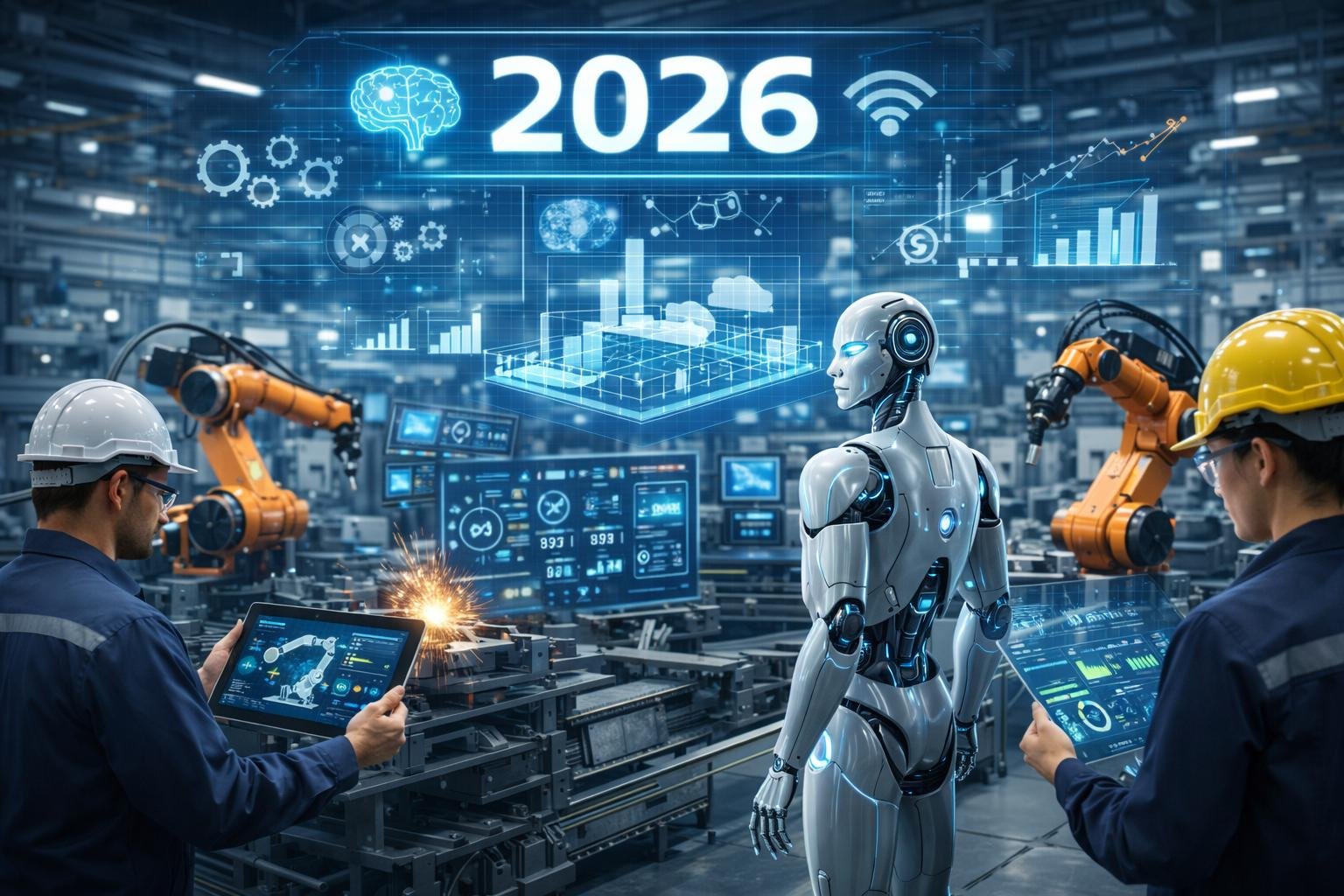
Technology continues to change how people work, communicate, learn, shop, build businesses, and manage information. In 2026, the most important developments are not limited to new devices. Much of the change is happening through artificial intelligence, automation, security, cloud infrastructure, connected systems, and technologies that combine digital intelligence with the physical world.
For businesses, these developments can create opportunities to improve productivity, customer service, software development, data analysis, and operations. For individuals, they can make everyday tasks easier and create new ways to learn and work.
However, adopting every new technology is not necessarily a smart decision. Cost, security, privacy, reliability, skills, and actual business value should all be considered before investing in a new system.
This guide examines the top modern technology trends in 2026 for businesses and individuals, explains how they work, and discusses where they can provide practical value.
1. Artificial Intelligence Is Becoming More Practical
Artificial intelligence remains one of the most important technology trends in 2026.
AI is increasingly being integrated into software that people already use rather than existing only as a separate experimental tool. Businesses are using AI for content assistance, data analysis, customer support, software development, research, document processing, and workflow automation.
Gartner’s 2026 technology research identifies AI-native development platforms, AI supercomputing, multiagent systems, domain-specific language models, and physical AI among major strategic technology trends.
How Businesses Can Use AI
A small or medium-sized business may use AI to:
- Draft and edit business documents
- Analyze customer information
- Summarize long documents
- Assist customer-service teams
- Generate software code
- Organize internal information
- Support marketing research
- Automate repetitive workflows
AI does not eliminate the need for human judgment. Important business, financial, legal, or customer-facing information should still be reviewed.
How Individuals Can Use AI
Individuals can use AI tools for:
- Learning
- Writing assistance
- Translation
- Brainstorming
- Research assistance
- Programming
- Planning
- Organizing information
The most useful skill is not simply knowing how to ask an AI system a question. Users also need to know how to evaluate its answers.
2. AI Agents and Multiagent Systems
One of the important developments in 2026 is the movement from simple AI assistants toward AI agents.
A traditional chatbot generally responds to a request. An AI agent can be designed to perform several steps toward a defined objective, sometimes interacting with software and other systems.
Multiagent systems take this further by allowing multiple specialized AI agents to work together on different parts of a task.
Gartner identifies multiagent systems as one of its strategic technology trends for 2026, describing them as collections of AI agents that interact to achieve complex goals.
Example
Imagine an online business receiving a customer inquiry.
Instead of requiring several manual steps, an agent-based workflow could potentially:
- Read the inquiry.
- Identify the customer’s request.
- Retrieve relevant information.
- Prepare a response.
- Send the information for human approval.
- Update the appropriate business system.
This does not mean every business should immediately automate customer communication. Poorly controlled agents can make incorrect decisions or receive excessive permissions.
Why Security Matters
AI agents can introduce new security risks because they may interact with business systems.
Gartner’s 2026 security research highlights the need for governance, access controls, identity management, and monitoring as organizations adopt AI agents.
For businesses, the principle is simple:
The more authority an AI system receives, the more important security and human oversight become.
3. Domain-Specific AI Models
General-purpose AI systems are useful for many tasks, but businesses often need systems that understand a particular industry or type of information.
This is where domain-specific language models become important.
A domain-specific model can be designed or adapted for a particular industry, organization, task, or specialized knowledge area.
For example, organizations may want AI systems that understand:
- Engineering documents
- Financial terminology
- Legal information
- Healthcare terminology
- Manufacturing processes
- Customer-service documentation
- Internal company procedures
Gartner lists domain-specific language models as a major 2026 trend because organizations are increasingly looking for AI systems that are more targeted to specific business needs.
The challenge is that specialized systems require appropriate data, testing, governance, and maintenance.
4. AI-Native Software Development
Software development is also changing as developers use AI-assisted coding and development platforms.
AI tools can help programmers generate code, explain existing code, identify potential errors, create documentation, and work through development tasks.
This can make software development faster in some situations.
However, generated code still requires testing and review. A developer who accepts AI-generated code without understanding it can introduce security vulnerabilities or technical problems.
What This Means for Individuals
People interested in technology do not necessarily need to become expert programmers immediately.
Learning basic concepts such as:
- Logic
- Databases
- APIs
- Web development
- Software testing
- Cybersecurity
can make AI coding tools much more useful.
5. AI Supercomputing and Advanced Computing Infrastructure
AI applications require substantial computing resources.
Modern AI infrastructure increasingly uses specialized processors, large memory systems, high-speed networking, and other computing technologies designed for demanding workloads.
Gartner lists AI supercomputing platforms among its 2026 strategic technology trends.
This infrastructure is particularly relevant to large organizations, technology providers, research institutions, and companies developing sophisticated AI systems.
For ordinary users, the impact may be less visible. Much of the processing can happen in cloud infrastructure rather than on a personal computer.
6. Cybersecurity Is Becoming a Core Technology Priority
As businesses use more cloud services, AI systems, connected devices, and digital platforms, security becomes increasingly important.
In 2026, security is not simply about installing antivirus software. Organizations increasingly need to consider identity, access control, data security, AI security, software supply chains, and continuous monitoring.
Gartner’s 2026 security research identifies agentic AI, post-quantum preparation, identity management for AI agents, AI-supported security operations, and AI-specific security awareness as important areas.
Basic Cybersecurity Practices
Individuals and small businesses should consider:
- Strong and unique passwords
- Multi-factor authentication
- Regular software updates
- Secure backups
- Limited account permissions
- Careful handling of sensitive information
- Awareness of phishing attempts
Cybersecurity is not a one-time project. It requires continuous attention.
7. AI Security and AI Governance
As organizations deploy more AI systems, a new question becomes important:
How do you control and secure the AI itself?
AI security platforms are designed to provide visibility and controls around AI applications.
Gartner identified AI security platforms as a 2026 strategic trend and highlighted risks such as prompt injection, data leakage, and unauthorized agent actions.
For businesses, AI governance can include:
- Defining which AI tools employees may use
- Protecting confidential information
- Monitoring AI usage
- Reviewing AI-generated decisions
- Establishing approval processes
- Maintaining appropriate records
This is especially important for organizations handling customer, financial, legal, or proprietary information.
8. Cloud Computing Continues to Support Digital Business
Cloud computing remains an important foundation for modern digital services.
Businesses can use cloud infrastructure for:
- Website hosting
- Databases
- File storage
- Business applications
- Software development
- Data analysis
- Backup systems
- AI services
One major advantage of cloud technology is flexibility. Businesses can access computing resources without necessarily building and maintaining all of the physical infrastructure themselves.
However, cloud services also introduce considerations around subscription costs, provider dependency, data privacy, availability, and security.
9. Edge Computing and Real-Time Data
Edge computing moves some processing closer to where data is generated.
This can be useful when systems need rapid responses or when sending every piece of data to a distant cloud server is inefficient.
Examples include:
- Smart factories
- Connected vehicles
- Industrial sensors
- Security systems
- Smart buildings
- Real-time monitoring
Cloud and edge computing are not necessarily competitors. In many systems, they work together.
A device might process urgent information locally while sending selected information to the cloud for long-term storage and analysis.
10. Physical AI and Intelligent Robotics
AI is increasingly moving beyond screens and software into physical machines.
This area is sometimes described as physical AI.
It includes technologies involving:
- Robots
- Autonomous machines
- Drones
- Smart industrial equipment
- Intelligent sensors
- Automated systems
Gartner identifies physical AI as one of its 2026 strategic technology trends.
Business Applications
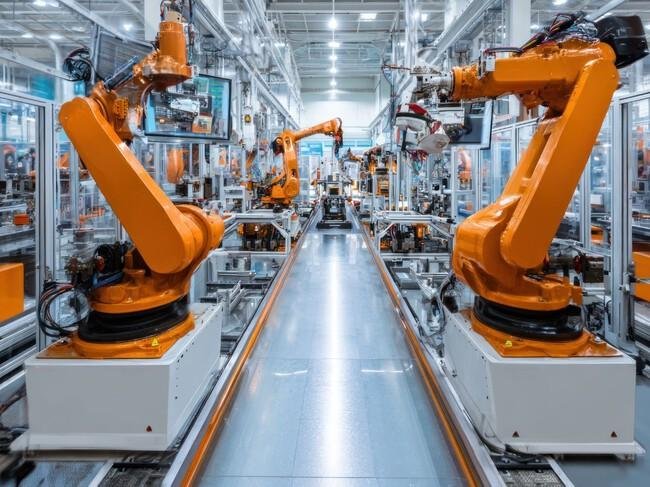
Robotics can be useful in controlled environments such as:
- Manufacturing
- Warehousing
- Logistics
- Inspection
- Agriculture
- Research
Humanoid robots receive significant public attention, but practical deployment depends on factors such as cost, reliability, safety, maintenance, and the complexity of the environment.
11. Internet of Things and Connected Devices
The Internet of Things (IoT) connects physical devices and sensors to digital networks.
Examples include:
- Smart electricity meters
- Industrial sensors
- Connected vehicles
- Building-management systems
- Smart security devices
- Agricultural sensors
Businesses can use IoT data to monitor equipment, energy consumption, inventory, environmental conditions, and other operational information.
The Main Challenge
More connected devices also mean more devices that need to be secured.
Businesses should therefore consider device authentication, software updates, network security, access control, and data protection.
12. Digital Twins
A digital twin is a digital representation of a physical object, system, or environment that can be connected to real-world data.
For example, a digital twin could represent:
- A building
- A factory
- A machine
- A vehicle
- Infrastructure
- An energy system
Digital Twins in Construction
Construction and engineering professionals can use digital models to visualize buildings, coordinate information, and monitor assets.
A digital twin can potentially become more useful when it is connected to sensors and operational data.
However, creating a useful digital twin requires accurate information and suitable software. It is not simply a 3D model with a new name.
13. Advanced Energy and Battery Technology
Energy storage remains an important technology area because batteries are used in vehicles, electronics, renewable-energy systems, and backup power.
Research and development continue across battery chemistry, manufacturing, charging, durability, safety, and recycling.
For individuals, improvements can affect electric vehicles and consumer electronics.
For businesses, energy-storage technology can become relevant to backup power, renewable-energy systems, industrial operations, and electricity management.
The practical value depends on local electricity infrastructure, equipment costs, available technologies, and maintenance requirements.
14. Spatial Computing and Extended Reality
Spatial computing combines digital information with physical environments and includes technologies associated with augmented reality, virtual reality, and mixed reality.
These technologies can be used for:
- Training
- Education
- Engineering visualization
- Architecture
- Product design
- Simulation
- Remote collaboration
- Entertainment
For example, an engineer can use a three-dimensional digital model to examine a design before construction.
The main limitations include hardware costs, comfort, battery life, software availability, and whether the technology provides enough value for the particular use case.
15. Digital Provenance and Content Verification
As AI-generated text, images, audio, video, and software become more common, determining where digital content came from becomes increasingly important.
Digital provenance refers to information that helps establish the origin, ownership, history, or integrity of digital assets.
Gartner includes digital provenance among its 2026 strategic technology trends, particularly in relation to software, data, AI-generated content, and digital supply chains.
For businesses, provenance can help with questions such as:
- Where did this file come from?
- Who created it?
- Has it been modified?
- Which software or data was used?
- Can its origin be verified?
This area is likely to become increasingly relevant as organizations use more AI-generated material.
16. Quantum Computing and Post-Quantum Security
Quantum computing remains an emerging field rather than a replacement for conventional computers.
Quantum systems use fundamentally different computing principles and may eventually provide advantages for certain specialized problems.
At the same time, organizations are beginning to consider the security implications of future quantum capabilities.
Gartner’s 2026 security research recommends that organizations begin planning for post-quantum cryptography because sensitive information may need protection over long periods.
For most individuals, quantum computing is not something they need to purchase or use directly today. Its more immediate relevance is to researchers, technology companies, governments, and organizations managing long-lived sensitive information.
How These Technology Trends Affect Businesses
The technologies discussed above can affect businesses in several ways.
Productivity
AI and automation can reduce repetitive work and assist employees with information-heavy tasks.
Customer Experience
Businesses can use digital tools to improve communication, personalization, customer support, and online services.
Software Development
AI-assisted development can help teams build and maintain applications, although testing and human review remain necessary.
Data Management
Cloud, edge, IoT, and AI technologies can change how organizations collect and process information.
Security
As digital systems become more interconnected, security becomes part of everyday business management.
New Business Models
Technology can create opportunities for software services, digital education, online marketplaces, AI-assisted services, automation consulting, and other technology-enabled businesses.
However, technology alone does not create a successful business. Customer demand, pricing, execution, competition, and operational management remain important.
How Individuals Can Benefit From Modern Technology in 2026
Individuals do not need to learn every technology trend.
Instead, focus on technologies that are relevant to your work, education, or business.
Learn AI Literacy
Understand what AI can do, where it can fail, and how to verify information.
Strengthen Cybersecurity
Use strong passwords, multi-factor authentication, updates, and secure backups.
Learn Digital Tools Relevant to Your Career
For example:
- Designers can learn AI-assisted design tools.
- Marketers can learn analytics and automation.
- Engineers can learn BIM and digital modeling.
- Teachers can learn educational technology and AI-assisted lesson planning.
- Entrepreneurs can learn cloud software, digital marketing, and business automation.
Keep Learning
Technology changes quickly. A tool learned today may be replaced or substantially changed later.
Transferable skills therefore matter more than memorizing one specific software product.
Technology Trends in 2026: Business vs. Individual Use
| Technology | Business Use | Individual Use |
|---|---|---|
| Generative AI | Research, content, automation | Learning, writing, productivity |
| AI agents | Workflow automation | Personal task assistance |
| Cybersecurity | Protect systems and data | Protect accounts and devices |
| Cloud computing | Software and infrastructure | Storage and online services |
| IoT | Monitoring and automation | Smart devices |
| Robotics | Manufacturing and logistics | Emerging consumer applications |
| Digital twins | Engineering and asset management | Limited direct use |
| Spatial computing | Training and visualization | Entertainment and learning |
| Advanced batteries | Energy storage and mobility | Electronics and electric vehicles |
| Quantum computing | Research and specialized computing | Mostly indirect impact |
What Businesses Should Consider Before Adopting New Technology
Adopting technology simply because it is trending can waste money.
Before purchasing or deploying a new system, ask:
1. What problem does it solve?
A clear business problem should come before the technology.
2. What is the total cost?
Include subscriptions, hardware, implementation, training, maintenance, and security.
3. Is the technology mature?
Some technologies are commercially established, while others are still developing.
4. What data does it require?
Consider privacy, security, storage, and data ownership.
5. Can employees use it effectively?
A sophisticated tool has little value if the people using it are not trained.
6. What happens if the technology fails?
Businesses should consider backup processes and contingency plans.
The Biggest Technology Mistakes to Avoid in 2026
Adopting Technology Without a Business Reason
A new tool is not automatically useful.
Trusting AI Without Verification
AI can produce inaccurate information.
Ignoring Cybersecurity
Connecting more systems without securing them increases risk.
Giving AI Excessive Permissions
AI agents should receive only the access they actually need.
Ignoring Employees
Technology adoption requires people who understand how and why the system is being used.
Focusing Only on Short-Term Cost
A cheap tool may become expensive if it requires significant maintenance, training, or replacement.
What Should Businesses Prioritize?
There is no universal technology strategy for every organization.
A small online business may benefit most from AI-assisted productivity, cloud software, analytics, and security.
A manufacturing company may have greater interest in robotics, IoT, digital twins, and industrial AI.
An engineering company may prioritize BIM, digital twins, simulation, AI-assisted design, and cloud collaboration.
A technology company may focus on AI-native development, AI infrastructure, security, and specialized AI models.
The right technology depends on the organization’s actual needs.
Frequently Asked Questions
What are the top modern technology trends in 2026?
Major trends include generative AI, AI agents, multiagent systems, AI-native software development, AI security, security, cloud and edge computing, robotics, IoT, digital twins, spatial computing, advanced energy technology, and emerging quantum computing.
Which technology trend is most important for businesses?
There is no single technology that is equally important for every business. AI and security are broadly relevant, but the right priority depends on the company’s industry, customers, infrastructure, budget, and objectives.
How can individuals benefit from technology trends in 2026?
Individuals can use modern technology for learning, productivity, communication, career development, creative work, and business activities. Developing AI literacy and basic security skills can also help people use digital tools more effectively.
Is AI safe for business use?
AI can be useful in business, but it should be implemented with appropriate security, privacy, governance, and human oversight. Businesses should avoid putting confidential information into tools without understanding how that information is handled.
Will technology replace human workers?
Technology can automate specific tasks and change job responsibilities, but the effect differs across industries and occupations. People who combine technology skills with communication, judgment, domain expertise, and problem-solving can remain important as workplaces change.
What is the best way to keep up with technology?
Follow reliable technology sources, learn the fundamentals behind important technologies, test tools carefully, and focus on developments relevant to your profession or business rather than trying to follow every new product.
Conclusion
The top modern technology trends in 2026 are increasingly centered around practical artificial intelligence, automation, security, connected systems, advanced computing, and the integration of digital intelligence with the physical world.
AI agents and multiagent systems are changing how software can perform tasks. AI-native development is influencing programming. Robotics and physical AI are bringing intelligence into machines, while IoT and digital twins connect physical environments with digital systems.
At the same time, security and AI governance are becoming increasingly important because greater technological capability also creates new risks. Gartner’s 2026 research emphasizes this combination of innovation, security, governance, and infrastructure.
For individuals, the practical lesson is to develop digital skills that remain useful as individual tools change. For businesses, the focus should be on solving real problems, protecting information, training employees, and measuring whether technology actually improves operations.
Modern technology can create significant opportunities, but it should be evaluated carefully. The most useful technology is not necessarily the newest technology—it is the technology that solves a real problem reliably, securely, and at a reasonable cost.
Related Keywords:
- modern technology trends 2026
- technology trends 2026
- latest technology trends
- emerging technology 2026
- AI trends 2026
- business technology trends
- future technology trends
- new technology 2026
- AI agents
- security trends 2026
- digital transformation
- emerging technologies for businesses
Editorial Quality Check
- Original, reader-focused content
- Natural use of the focus keyword
- No fabricated statistics or testimonials
- Current 2026 technology information supported by reliable sources
- Clear distinction between established technologies and emerging technologies
- Includes practical benefits and limitations
- Suitable for a general business and technology audience
- Advertiser-friendly
- No guaranteed financial or business outcomes
- No excessive keyword repetition