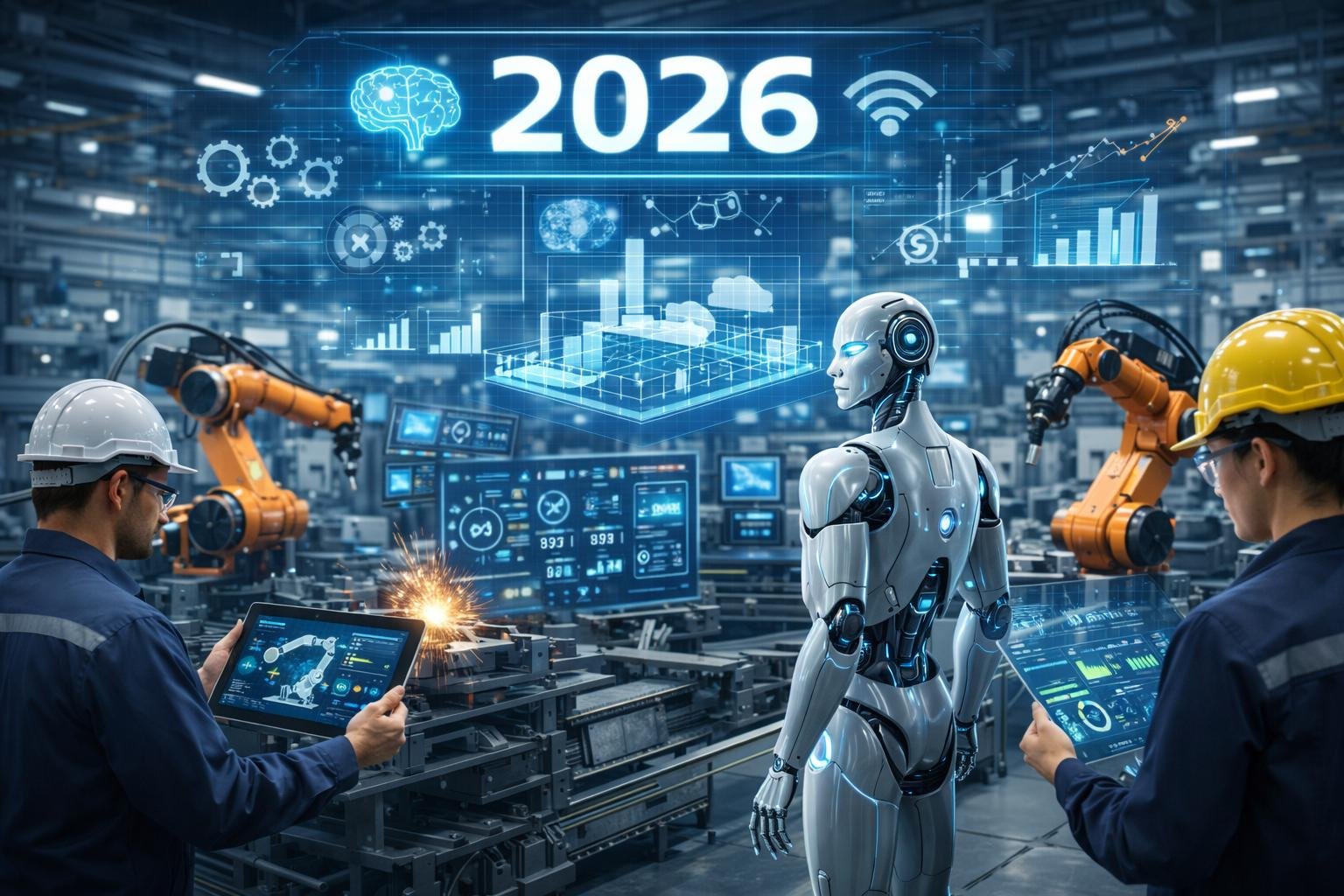
Technology continues to evolve at a remarkable pace, but 2026 is less about futuristic concepts and more about turning emerging technologies into practical tools.
From artificial intelligence and autonomous systems to robotics, cybersecurity, advanced computing, smart devices, and digital infrastructure, many technologies are moving from experimentation toward real-world applications.
For businesses and individuals, keeping up with these developments can be difficult. New products appear constantly, while some technologies receive significant attention before they are mature enough for widespread adoption.
Understanding the biggest new modern technology trends to watch in 2026 can help businesses identify useful opportunities, professionals develop relevant skills, and consumers make more informed decisions.
This guide explores the major technology trends worth watching in 2026, including their practical applications, benefits, limitations, and potential impact on different industries.
What Are the Biggest Technology Trends in 2026?
The technology landscape in 2026 includes several overlapping developments rather than one dominant invention.
Some of the most important trends include:
- Artificial intelligence and generative AI
- AI agents and intelligent automation
- Robotics and autonomous systems
- Advanced cybersecurity
- Cloud and edge computing
- Internet of Things
- Digital twins
- Spatial computing
- Advanced battery and energy technologies
- Quantum computing
- AI-powered software development
- Advanced manufacturing and 3D printing
These technologies are developing at different speeds. Some are already widely available, while others remain primarily in research, testing, or specialized applications.
1. Artificial Intelligence Is Becoming More Practical
Artificial intelligence remains one of the most important technology trends to watch in 2026.
AI is no longer limited to experimental research or highly specialized applications. It is increasingly integrated into everyday software used for writing, programming, research, customer support, data analysis, design, and business operations.
Generative AI can create or transform text, images, audio, video, and software code.
How Businesses Are Using AI
Businesses can use AI to assist with:
- Writing and editing
- Customer support
- Data analysis
- Market research
- Document processing
- Software development
- Translation
- Internal knowledge management
- Workflow automation
However, AI-generated information should be reviewed when accuracy is important.
AI systems can make mistakes, misunderstand context, or produce information that sounds convincing but is incorrect.
The Main Lesson
The value of AI is not simply that it can generate content quickly. Its real value comes from how effectively it helps solve a specific problem.
2. AI Agents and Autonomous Workflows
A major development related to AI is the growth of AI agents.
Traditional AI applications often respond to individual instructions. Agent-based systems are designed to perform multiple steps toward a particular objective.
For example, an AI agent could potentially:
- Receive a task.
- Gather relevant information.
- Analyze that information.
- Use approved software tools.
- Complete several related actions.
- Report the results to a human.
This creates possibilities for more automated business workflows.
Where AI Agents Could Be Useful
Potential applications include:
- Administrative tasks
- Customer service
- Research workflows
- Software development
- Data processing
- Business operations
- Scheduling
- Internal company processes
But greater autonomy also creates greater risks.
Businesses need to carefully control what an AI agent can access and what actions it can perform. Human oversight remains important for sensitive or high-impact operations.
3. Robotics Is Moving Beyond Traditional Automation
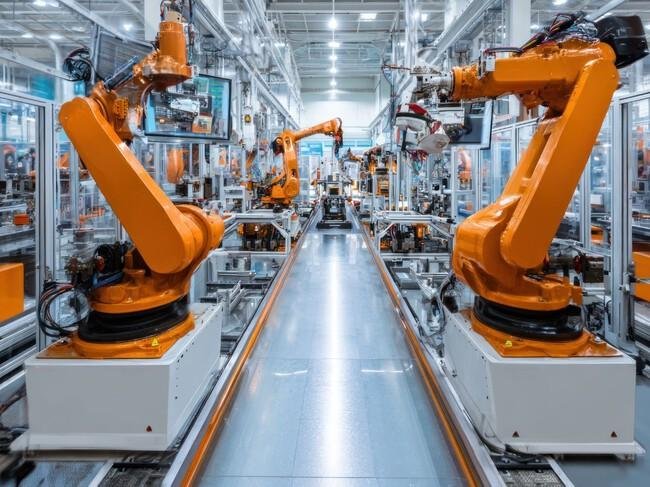
Robotics has been used in manufacturing for decades, but newer robotic systems are designed to perform a wider variety of tasks.
Industrial robots remain important, while research and commercial development are also focusing on mobile robots and humanoid systems.


5
Applications of Modern Robotics
Robots can be used in:
- Manufacturing
- Warehousing
- Logistics
- Agriculture
- Inspection
- Healthcare environments
- Research
- Construction
- Repetitive physical work
Humanoid robots receive significant attention because their physical form is designed to operate in environments built for humans.
However, practical deployment depends on reliability, safety, maintenance, cost, and the complexity of the environment.
A robot that performs a predictable factory task may face much greater challenges in an unpredictable public environment.
4. Cybersecurity Is Becoming More Important
As more organizations depend on cloud services, connected devices, AI, and digital infrastructure, cybersecurity is becoming an increasingly important part of technology strategy.
Modern cybersecurity involves multiple layers rather than one piece of software.
These can include:
- Identity management
- Multi-factor authentication
- Encryption
- Network security
- Security monitoring
- Automated threat detection
- Data protection
- Employee security training
Why Businesses Need Better Security
A small business might depend on:
- Email accounts
- Websites
- Social-media accounts
- Customer databases
- Payment services
- Cloud applications
- Online documents
A compromised account or system can cause operational and financial problems.
Businesses should therefore treat cybersecurity as an ongoing process rather than a one-time installation.
5. Cloud Computing and Edge Computing Continue to Evolve
Cloud computing has changed how businesses access software, storage, databases, and computing resources.
Instead of maintaining every system on local hardware, organizations can use internet-based infrastructure from specialized providers.
Edge computing takes a different approach by processing some information closer to where it is generated.
Cloud vs. Edge Computing
| Technology | Main Purpose | Example |
|---|---|---|
| Cloud computing | Centralized computing and storage | Business software |
| Edge computing | Local or nearby processing | Industrial sensors |
| Local computing | Processing on a device | Personal computer |
The two approaches can work together.
For example, a smart factory may process urgent information locally while sending larger datasets to cloud infrastructure for analysis.
6. The Internet of Things Is Expanding
The Internet of Things, commonly called IoT, connects physical devices to digital networks.
These devices can collect information, communicate with other systems, or respond to commands.
Examples include:
- Smart meters
- Industrial sensors
- Connected vehicles
- Security systems
- Smart appliances
- Environmental monitoring devices
- Building-management systems
IoT in Buildings and Construction
IoT can be particularly useful for buildings.
Sensors can monitor:
- Temperature
- Energy consumption
- Equipment condition
- Air quality
- Water usage
- Occupancy
This information can help building managers understand how a facility is operating.
However, every connected device also introduces cybersecurity and maintenance considerations.
7. Digital Twins Are Changing Engineering and Industry
A digital twin is a digital representation of a physical object, building, machine, or system.
The digital model can be connected to real-world information, allowing organizations to monitor and analyze physical assets.


7
Digital Twins in Construction
Digital twins can complement Building Information Modeling (BIM) and other digital construction technologies.
Potential applications include:
- Building design
- Facility management
- Equipment monitoring
- Infrastructure management
- Energy analysis
- Maintenance planning
- Simulation
For construction and engineering companies, the combination of digital models and real-world data can improve understanding of complex projects.
The technology does require reliable data and appropriate software infrastructure, so it is not equally practical for every project.
8. Spatial Computing and Extended Reality
Spatial computing is another technology area worth watching.
It includes experiences associated with augmented reality, virtual reality, and mixed reality.
Instead of interacting with digital information only through a traditional screen, spatial technologies can place digital objects and information into a three-dimensional environment.
Practical Applications
Spatial computing can be useful for:
- Architecture
- Engineering
- Education
- Training
- Product design
- Industrial visualization
- Remote collaboration
- Entertainment
For example, an architect could use a three-dimensional environment to examine a building design from different perspectives.
The limitations include hardware costs, comfort, battery life, software availability, and the need for suitable applications.
9. Advanced Battery and Energy Technology
Energy storage is becoming increasingly important as electricity becomes central to transportation, computing, communications, and renewable-energy systems.
Battery research and manufacturing are developing in areas such as:
- Energy density
- Charging performance
- Durability
- Safety
- Manufacturing efficiency
- Alternative materials
- Recycling


6
Why Energy Storage Matters
Better energy storage can support:
- Electric transportation
- Solar-energy systems
- Backup power
- Portable electronics
- Grid storage
- Industrial applications
However, battery technology involves more than performance. Manufacturing capacity, raw materials, recycling, cost, and safety also matter.
10. Quantum Computing Remains an Emerging Technology
Quantum computing is fundamentally different from conventional computing.
It uses quantum-mechanical principles to process information in ways that can potentially provide advantages for certain specialized problems.
Potential areas of interest include:
- Scientific simulation
- Materials research
- Chemistry
- Optimization
- Cryptography research
However, quantum computing remains a developing field.
It should not be presented as a replacement for ordinary computers in 2026. Significant technical challenges remain around reliability, error correction, scalability, and practical applications.
For most consumers and businesses, conventional computing remains the appropriate technology for everyday workloads.
11. AI Is Transforming Software Development
Software development is another area experiencing major changes through AI.
AI-assisted programming tools can help developers:
- Generate code
- Explain code
- Find potential errors
- Create documentation
- Write tests
- Explore implementation options
This does not eliminate the need for software developers.
Good software still requires architecture, security, testing, debugging, maintenance, and understanding of user requirements.
The role of developers may increasingly involve working with AI tools while maintaining responsibility for the final software.
12. 3D Printing and Advanced Manufacturing
3D printing, also known as additive manufacturing, continues to develop as a production and prototyping technology.
Instead of removing material from a larger piece, additive manufacturing builds an object layer by layer.
Where 3D Printing Can Help
Applications include:
- Product prototypes
- Engineering components
- Custom parts
- Manufacturing
- Education
- Research
- Design testing
3D printing can be especially useful when manufacturers need customized or geometrically complex components.
It is not automatically cheaper or faster than traditional manufacturing. Material selection, production volume, equipment, finishing, and quality requirements all affect whether it is the right choice.
13. AI-Powered Healthcare Technology
Healthcare is another area where digital technology and AI are developing rapidly.
Potential applications include:
- Medical image analysis
- Administrative automation
- Research
- Patient monitoring
- Data management
- Clinical decision-support systems
Healthcare technology requires particularly careful oversight because errors can have serious consequences.
AI should therefore be viewed as a tool that can support qualified professionals rather than a universal replacement for medical expertise.
14. Smart Cities and Connected Infrastructure
Cities are becoming more digitally connected.
Sensors, communication networks, data platforms, intelligent transportation systems, and automated infrastructure can help cities collect and manage information.
Potential applications include:
- Traffic monitoring
- Smart lighting
- Water management
- Waste management
- Energy monitoring
- Public infrastructure management


6
Smart-city projects can be expensive and require coordination between technology providers, governments, infrastructure operators, and communities.
Successful implementation therefore requires more than simply installing sensors.
15. Green Technology and Sustainable Innovation
Technology development is increasingly connected with energy efficiency, resource management, and environmental considerations.
Examples include:
- Renewable-energy systems
- Energy-storage technologies
- Smart electricity systems
- Efficient buildings
- Electric transportation
- Digital monitoring
- Resource-efficient manufacturing
The environmental benefit of a technology depends on how it is designed, manufactured, powered, used, and eventually disposed of.
Therefore, it is important to evaluate the complete lifecycle rather than assuming that every technology marketed as “green” automatically has the same environmental impact.
How These Technology Trends Affect Small Businesses
Small businesses do not need to adopt every emerging technology.
A better approach is to identify specific problems and then find appropriate tools.
For example:
Problem: Too much repetitive administration
Potential solution: Automation and AI-assisted software.
Problem: Difficulty managing customer information
Potential solution: Cloud-based customer-management software.
Problem: High energy consumption
Potential solution: Smart monitoring and energy-management systems.
Problem: Equipment maintenance
Potential solution: Sensors and connected monitoring systems.
Problem: Slow content production
Potential solution: AI-assisted drafting combined with human editing.
The technology should serve the business—not the other way around.
Technology Trends and the Future of Jobs
Automation and AI are changing the tasks people perform.
Some repetitive tasks may become increasingly automated, while demand can grow for people who can manage technology, interpret information, solve problems, and provide specialized knowledge.
This makes a combination of technical skills and human skills increasingly useful.
Skills Worth Developing in 2026
Consider developing:
- AI literacy
- Data analysis
- Cybersecurity awareness
- Digital communication
- Problem solving
- Critical thinking
- Software skills
- Industry-specific technical knowledge
The strongest skill combination will vary by profession.
For example, an engineer may benefit from learning BIM, digital modeling, data tools, and AI-assisted workflows.
A marketer may benefit from analytics, automation, content strategy, and AI tools.
How to Decide Which Technology to Adopt
Before spending money on new technology, ask several practical questions.
1. What problem does it solve?
If you cannot clearly identify the problem, adoption may not be justified.
2. Is it mature enough?
Some technologies are proven, while others are still experimental.
3. What is the total cost?
Include:
- Hardware
- Software
- Subscriptions
- Training
- Maintenance
- Integration
- Security
4. What are the risks?
Consider privacy, cybersecurity, reliability, vendor dependence, and regulatory requirements.
5. Can your team use it?
A sophisticated system provides little value if employees cannot operate it effectively.
The Biggest Benefits of Modern Technology
Modern technology can provide several practical benefits.
Greater Productivity
Automation can reduce repetitive work.
Better Access to Information
Cloud platforms and connected systems make information easier to access.
Improved Communication
Digital communication tools allow individuals and organizations to work across geographical boundaries.
Better Decision-Making
Data analysis can help organizations understand operations and customers.
New Business Opportunities
Digital tools can make it possible to create services that were previously difficult or expensive to deliver.
The Biggest Challenges
Technology also introduces important challenges.
| Challenge | Why It Matters |
|---|---|
| Cybersecurity | Connected systems can create security risks |
| Privacy | Digital services may process sensitive information |
| Cost | Advanced technology can require significant investment |
| Skills | Employees may need training |
| Reliability | New systems may not always perform as expected |
| Regulation | Rules can vary between countries and industries |
| Vendor dependence | Businesses may rely heavily on technology providers |
These challenges should be considered before implementation.
What Should Businesses Watch in the Rest of 2026?
Businesses should pay particular attention to how emerging technology moves from demonstrations into practical products.
Instead of asking only, “What is the newest technology?”, businesses should ask:
“Which technology can solve a problem we actually have?”
Areas worth monitoring include:
- AI-powered business software
- AI agents
- Cybersecurity automation
- Robotics
- Digital twins
- Cloud and edge infrastructure
- Connected devices
- Energy storage
- AI-assisted software development
- Advanced manufacturing
The most useful development may not always be the technology receiving the most attention. Sometimes a relatively simple improvement in software, connectivity, or automation can provide more practical value than a highly advanced experimental technology.
Frequently Asked Questions
What is the biggest technology trend in 2026?
Artificial intelligence is one of the most significant technology trends in 2026, particularly generative AI and AI-powered automation. However, robotics, cybersecurity, energy technology, connectivity, and advanced computing are also important areas of development.
What new technology should businesses use in 2026?
There is no single technology suitable for every business. Companies should select technology based on their specific problems, budget, employees, security requirements, and customers.
Will AI replace human workers?
AI can automate certain tasks, but its effect varies by occupation and industry. Many jobs involve responsibilities that require judgment, communication, physical activity, accountability, or specialized knowledge that cannot simply be reduced to one automated task.
Is quantum computing ready for everyday use?
Quantum computing is still an emerging technology. It has potential for specialized computational problems, but conventional computers remain the practical choice for most everyday applications.
How can beginners keep up with technology trends?
Beginners should focus on technologies relevant to their career or business rather than attempting to learn everything. Start with fundamental digital skills, experiment with reputable tools, follow reliable technical information, and continuously evaluate what is actually useful.
Conclusion
The biggest new modern technology trends to watch in 2026 extend far beyond artificial intelligence.
AI and AI agents are changing software and business workflows, robotics is expanding physical automation, cybersecurity is becoming more important, and IoT and digital twins are connecting physical environments with digital systems.
At the same time, spatial computing, advanced energy technology, quantum computing, 3D printing, cloud infrastructure, and smart-city technologies continue to develop.
Not every emerging technology will become mainstream, and not every new tool will be useful for every business.
The practical approach is to look beyond the hype. Understand what a technology does, examine its limitations, consider its cost and security implications, and determine whether it solves a real problem.
For individuals and businesses, the ability to evaluate and adapt to technology may be more valuable than simply following every new trend.
- new technology trends 2026
- modern technology trends
- emerging technology 2026
- latest technology trends
- future technology 2026
- AI technology 2026
- artificial intelligence trends
- robotics technology
- smart technology
- cybersecurity trends 2026
- digital transformation
- technology innovations