Introduction
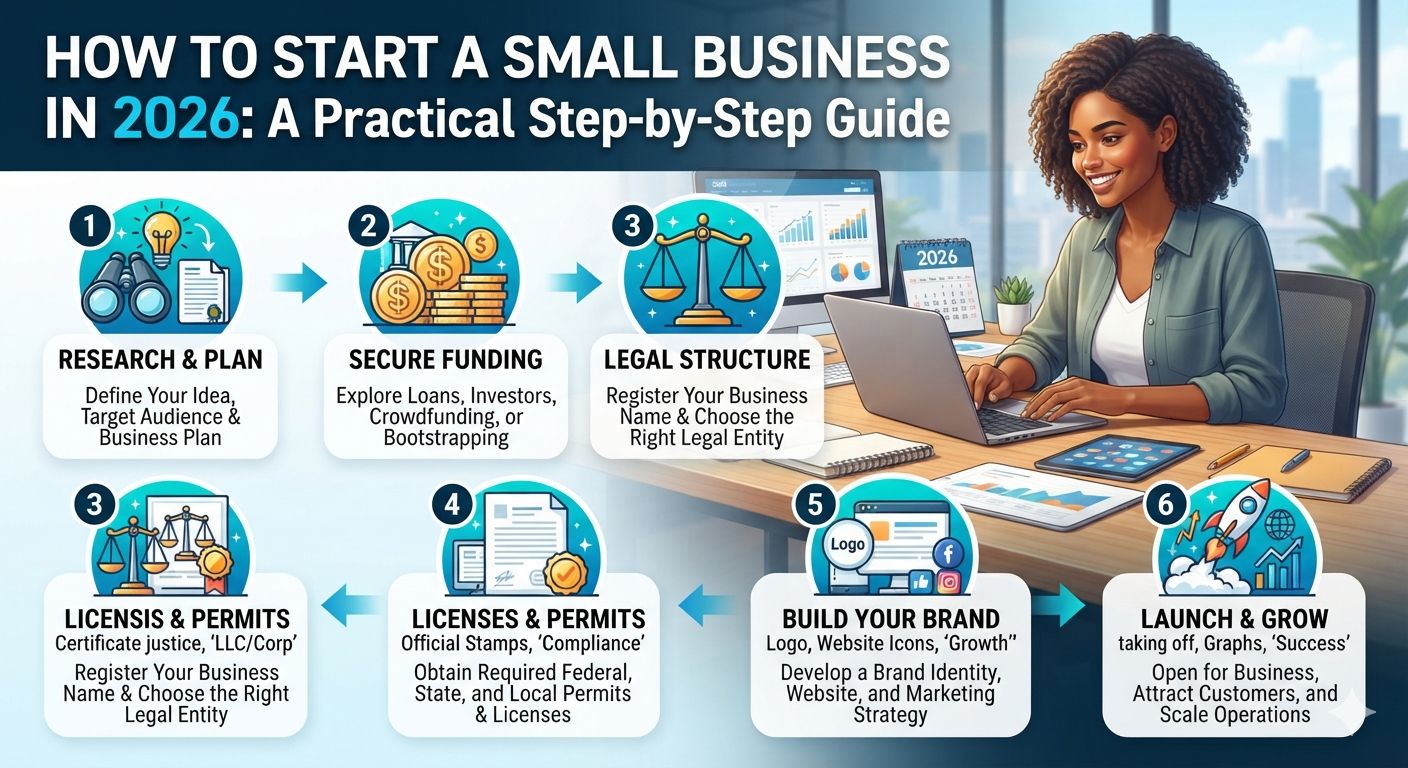
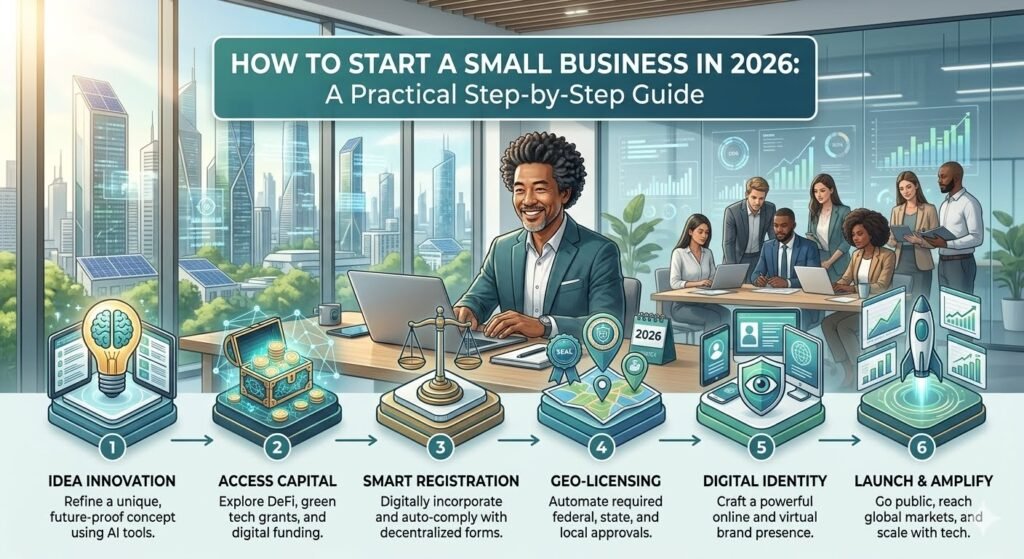
Starting a business has never been more accessible than it is today. Thanks to AI tools, digital marketplaces, and affordable online platforms, entrepreneurs have more opportunities than ever before. If you’re wondering how to start a small business in 2026, this step-by-step guide will help you build a strong foundation and avoid common mistakes.
Whether you want to launch an online store, offer freelance services, or open a local business, the process is easier when you have a clear plan.
Why 2026 Is a Great Small Business Startup Checklist for 2026
Use this checklist to make sure you’ve covered the essentials before launching your business.
Planning
- Choose a profitable business idea.
- Identify your target audience.
- Research your competitors.
- Validate demand for your product or service.
- Write a simple business plan.
Legal Setup
- Select a business name.
- Register your business if required.
- Apply for necessary licenses or permits.
- Open a business bank account.
- Understand your tax obligations.
Branding
- Design a professional logo.
- Choose brand colors and fonts.
- Create a memorable brand message.
- Secure your domain name.
- Set up business email addresses.
Online Presence
- Build a user-friendly website.
- Optimize your website for SEO.
- Create social media profiles.
- Add clear contact information.
- Publish your first blog post or product page.
Marketing
- Create a content marketing plan.
- Set up an email list.
- Start posting on social media consistently.
- Encourage customer reviews.
- Track your marketing results.
Finance
- Create a startup budget.
- Monitor income and expenses.
- Set monthly financial goals.
- Build an emergency fund for your business.
- Reinvest profits wisely.
Completing these steps will give your business a strong foundation for long-term growth.
Small Business Trends to Watch in 2026
If you want to succeed, it’s important to stay informed about industry trends. These developments are shaping how businesses operate in 2026.
AI-Powered Business Operations
Artificial intelligence is helping entrepreneurs automate customer support, content creation, bookkeeping, scheduling, and data analysis. Businesses that use AI effectively can often reduce costs and improve productivity.
Personalized Customer Experiences
Customers expect businesses to understand their needs. Personalized emails, product recommendations, and tailored marketing campaigns can increase customer satisfaction and loyalty.
Social Commerce
People are increasingly discovering and purchasing products directly through social media platforms. Creating engaging short-form videos and interactive posts can help attract new customers.
Subscription-Based Services
Subscription models provide recurring revenue and strengthen customer relationships. This approach works well for digital products, educational content, software, and membership communities.
Sustainable Business Practices
Consumers are paying closer attention to environmentally friendly products and ethical business practices. Reducing waste, using sustainable packaging, and supporting local communities can strengthen your brand reputation.
How to Market a Small Business in 2026
Marketing doesn’t have to be expensive. The key is to reach the right audience consistently.
Search Engine Optimization (SEO)
Publish helpful content that answers your customers’ questions. Optimize each page with relevant keywords, clear headings, and internal links to improve your visibility in search results.
Content Marketing
Create blog posts, videos, infographics, and guides that educate your audience. High-quality content builds trust and positions your business as an authority in your industry.
Email Marketing
Collect email addresses from interested visitors and send valuable newsletters, promotions, and updates. Email remains one of the highest-return marketing channels for small businesses.
Social Media Marketing
Choose platforms where your audience spends the most time. Share educational tips, customer success stories, product demonstrations, and behind-the-scenes content to keep followers engaged.
Referral Marketing
Happy customers are one of your best marketing assets. Encourage referrals by offering excellent service and rewarding customers who recommend your business to others.
Building a Strong Customer Base
Customers are the foundation of every successful business. Focus on creating positive experiences that encourage repeat purchases.
Here are a few ways to build lasting customer relationships:
- Respond quickly to inquiries.
- Deliver products or services on time.
- Be honest about pricing and expectations.
- Listen to customer feedback.
- Solve problems professionally.
- Thank customers for their support.
- Reward loyal customers with special offers or exclusive benefits.
Strong relationships often lead to repeat business and positive word-of-mouth recommendations.
Key Takeaways
If you’re learning how to start a small business in 2026, remember these important points:
- Start with a business idea that solves a real problem.
- Research your market before investing money.
- Keep your business plan simple and actionable.
- Build a professional online presence.
- Use AI and digital tools to improve efficiency.
- Focus on providing value to your customers.
- Market your business consistently.
- Track your finances carefully.
- Continue learning and adapting to market changes.
- Stay patient and committed to long-term growth.
Starting a business is a journey, not a one-time event. With the right mindset, planning, and consistent effort, you can create a business that grows steadily and serves customers for years to come.Time to Start a Small Business
The business landscape continues to evolve. Consumers are buying more products online, remote work has become normal, and AI-powered tools are helping entrepreneurs save both time and money.
Some of the biggest advantages of starting a business in 2026 include:
- Low startup costs for many online businesses
- Easy access to global customers
- Affordable marketing through social media
- AI tools that automate repetitive tasks
- Flexible work schedules and location independence
If you’ve been waiting for the right time, 2026 offers plenty of opportunities.
Step 1: Choose the Right Business Idea
The first step in learning how to start a small business in 2026 is selecting a business idea that matches your skills and interests.
Ask yourself:
- What problems can I solve?
- What skills do I already have?
- Is there demand for this product or service?
- Can this business grow over time?
Popular business ideas in 2026 include:
- Digital marketing agency
- AI consulting
- Online coaching
- Print-on-demand stores
- Handmade products
- Content creation
- Affiliate marketing
- Virtual assistant services
- Home cleaning services
- Mobile car washing
Choose something you’re interested in because you’ll be spending a lot of time building it.
Step 2: Research Your Market
Before investing money, understand your target audience.
Research:
- Your ideal customers
- Competitors
- Pricing
- Customer reviews
- Industry trends
Read reviews on competitor websites and social media pages. Customers often reveal exactly what they want, giving you ideas to improve your own business.
Step 3: Create a Simple Business Plan
You don’t need a 50-page document.
A simple business plan should answer:
- What will you sell?
- Who will buy it?
- How will you market it?
- What are your startup costs?
- How much do you expect to earn?
- What are your monthly expenses?
A clear plan keeps you focused and helps you make smarter decisions.
Step 4: Register Your Business
The legal requirements depend on your country, but most businesses should:
- Choose a business name
- Register the business
- Obtain required licenses
- Apply for tax registration if needed
- Open a business bank account
Handling these steps early makes your business look more professional and protects you legally.
Step 5: Build Your Brand
Your brand is more than just a logo.
Create:
- A memorable business name
- A simple logo
- Brand colors
- Professional social media profiles
- A consistent tone of voice
People trust businesses that look professional and consistent across different platforms.
Step 6: Build Your Online Presence
Today, nearly every business benefits from having an online presence.
Consider creating:
- A professional website
- A Google Business Profile (for local businesses)
- Facebook page
- Instagram account
- Pinterest account
- LinkedIn page
- TikTok account if it fits your audience
Your website should clearly explain what you offer and make it easy for customers to contact you or place an order.
Step 7: Use AI Tools to Save Time
One major advantage of learning how to start a small business in 2026 is access to powerful AI tools.
AI can help you:
- Write blog posts
- Generate social media captions
- Create marketing images
- Design logos
- Answer customer questions
- Manage emails
- Organize projects
- Analyze business data
Using AI doesn’t replace creativity—it helps you work more efficiently.
Step 8: Create a Marketing Strategy
Even the best business won’t succeed if nobody knows about it.
Focus on marketing channels that match your audience.
Some of the best options include:
- SEO (Search Engine Optimization)
- Pinterest marketing
- Facebook marketing
- Instagram Reels
- TikTok videos
- Email marketing
- Blogging
- YouTube content
- Local networking
- Referral programs
Start with one or two marketing channels and improve them before expanding.
Step 9: Manage Your Finances Carefully
Many small businesses fail because they don’t manage money effectively.
Track:
- Income
- Expenses
- Taxes
- Profits
- Cash flow
Use accounting software or spreadsheets to stay organized from day one.
Avoid spending money on things you don’t need during the early stages.
Step 10: Keep Learning and Improving
Every successful entrepreneur continues learning.
Stay updated by:
- Reading business blogs
- Listening to podcasts
- Taking online courses
- Networking with other business owners
- Following industry news
Small improvements made consistently often lead to significant long-term growth.
Common Mistakes to Avoid
As you learn how to start a small business in 2026, watch out for these common mistakes:
- Waiting for everything to be perfect
- Ignoring customer feedback
- Spending too much on unnecessary tools
- Not researching the market
- Trying to target everyone
- Giving up too early
- Forgetting about marketing
- Mixing personal and business finances
Frequently Asked Questions About How to Start a Small Business in 2026
1. How much money do I need to start a small business in 2026?
The amount depends on the type of business you want to start. Many online businesses, such as freelancing, blogging, affiliate marketing, or digital consulting, can be launched with less than $500. Businesses that require inventory, equipment, or a physical location will usually need a larger investment.
The key is to start with a realistic budget and avoid unnecessary expenses in the beginning.
2. Can I start a small business with no experience?
Yes. Many successful entrepreneurs started with little or no business experience. The most important skills—such as marketing, customer service, budgeting, and sales—can be learned through online courses, books, and hands-on experience.
Start small, learn from your mistakes, and improve as you grow.
3. What are the best small business ideas in 2026?
Some of the fastest-growing business ideas include:
- AI consulting services
- Digital marketing agency
- Affiliate marketing
- Print-on-demand store
- E-commerce business
- Social media management
- Online tutoring
- Freelance writing
- Graphic design
- Virtual assistant services
- Personal fitness coaching
- Home cleaning services
Choose a business that aligns with your interests, skills, and market demand.
4. Should I create a website immediately?
Yes. A professional website helps build trust, showcases your products or services, and allows customers to find your business online. Even a simple website with your contact information, business description, and pricing can make a positive first impression.
5. How can I get my first customers?
Finding your first customers often requires consistent effort. Some effective strategies include:
- Asking friends and family for referrals
- Promoting your business on social media
- Joining local business groups
- Offering limited-time introductory discounts
- Sharing helpful content online
- Encouraging satisfied customers to leave reviews
Excellent customer service can also lead to valuable word-of-mouth recommendations.
Essential Tools for Small Business Owners in 2026
Using the right tools can save time and help your business run more efficiently.
Project Management
Keep track of tasks, deadlines, and team collaboration with project management software.
Accounting Software
Monitor income, expenses, invoices, and taxes with reliable accounting tools.
Email Marketing Platforms
Build an email list and stay connected with customers through newsletters and promotional campaigns.
Graphic Design Tools
Create professional-looking logos, social media graphics, and marketing materials without hiring a designer.
AI Productivity Tools
Use AI to generate content ideas, write marketing copy, summarize information, and automate repetitive tasks.
Cloud Storage
Store important business files securely and access them from anywhere.
Tips for Long-Term Business Success
Starting your business is only the beginning. Long-term success comes from building strong habits and staying committed to improvement.
Here are a few tips to help your business thrive:
- Focus on delivering exceptional customer service.
- Monitor your finances regularly.
- Invest in learning new skills.
- Stay updated on industry trends.
- Build relationships with customers and partners.
- Ask for customer feedback and make improvements.
- Be patient and stay consistent.
Creating a 90-Day Action Plan for Your New Business
One of the biggest mistakes new entrepreneurs make is trying to do everything at once. Instead, break your goals into manageable milestones. If you’re learning how to start a small business in 2026, a 90-day action plan can help you stay focused and measure your progress.
Days 1–30: Build the Foundation
During your first month, concentrate on planning and setting up your business.
Your priorities should include:
- Finalize your business idea.
- Research your competitors.
- Identify your target audience.
- Register your business if required.
- Create your logo and brand identity.
- Purchase a domain name.
- Launch a simple website.
- Set up your business email.
- Open social media accounts.
Don’t worry about perfection. Your goal is to establish a professional presence and prepare for your first customers.
Days 31–60: Launch and Promote
The second month is all about getting your business in front of potential customers.
Focus on these activities:
- Publish helpful blog articles.
- Share content on social media several times a week.
- Join relevant online communities.
- Ask friends and family to share your business.
- Collect customer testimonials.
- Offer a limited-time promotion for first-time buyers.
- Start building an email list.
- Monitor website traffic and customer inquiries.
This is also the ideal time to gather feedback and make improvements based on what you learn.
Days 61–90: Optimize and Grow
After launching, review your progress and look for ways to improve.
Consider these steps:
- Analyze which marketing channels perform best.
- Improve your website’s SEO.
- Expand your product or service offerings.
- Automate repetitive tasks.
- Strengthen customer relationships.
- Develop a monthly content calendar.
- Set revenue goals for the next quarter.
Growth comes from continuous improvement rather than dramatic changes.
Budgeting Tips for New Entrepreneurs
Good financial management is essential for long-term success.
Separate Personal and Business Finances
Open a dedicated business bank account so you can clearly track income and expenses. This also makes bookkeeping and tax preparation much easier.
Start Small
Avoid purchasing expensive equipment or software before it’s necessary. Begin with affordable tools and upgrade as your business grows.
Track Every Expense
Record even small purchases such as website hosting, advertising, office supplies, and software subscriptions. Understanding where your money goes helps you make better financial decisions.
Build an Emergency Fund
Unexpected expenses can happen at any stage of business. Setting aside a portion of your profits creates a financial safety net and reduces stress during slower months.
Time Management Tips for Small Business Owners
Running a business often means balancing multiple responsibilities. Managing your time effectively can help you stay productive without feeling overwhelmed.
Set Daily Priorities
At the beginning of each day, identify the three most important tasks that will move your business forward.
Avoid Multitasking
Working on one task at a time usually leads to better quality and fewer mistakes.
Schedule Time for Marketing
Many entrepreneurs focus only on serving existing customers and forget to attract new ones. Reserve time each week for marketing and business development.
Automate Repetitive Tasks
Use scheduling tools, email automation, invoicing software, and AI assistants to handle routine work, allowing you to focus on growth.
Review Your Progress Weekly
Spend a few minutes each week reviewing your achievements, challenges, and goals for the following week.
Signs Your Small Business Is Growing
Growth doesn’t always mean making huge profits immediately. Watch for these positive indicators:
- More website visitors.
- Increasing social media engagement.
- Repeat customers.
- Positive online reviews.
- Higher monthly revenue.
- More inquiries from potential clients.
- Growing email subscribers.
- Stronger brand recognition.
- Improved customer retention.
Celebrate these milestones—they show that your efforts are paying off.
Staying Motivated as a Business Owner
Every entrepreneur faces setbacks. The difference between success and failure often comes down to persistence.
To stay motivated:
- Set realistic goals.
- Celebrate small wins.
- Learn from mistakes instead of fearing them.
- Connect with other entrepreneurs.
- Continue improving your skills.
- Remember why you started your business.
Progress may seem slow at times, but consistent effort often produces meaningful results over the long term.
Final Words
Learning how to start a small business in 2026 is only the first step. Turning your idea into a successful business requires planning, consistency, and a willingness to adapt as markets and customer needs evolve.
Start with a clear vision, focus on solving real problems, and commit to delivering value every day. Build strong relationships with your customers, monitor your finances carefully, and keep refining your products, services, and marketing strategies.
Every successful company began as a small idea backed by action. By applying the practical steps outlined in this guide, you’ll be well-positioned to launch a business that can grow steadily and remain competitive in 2026 and beyond.
The most important step is to begin. Take action today, stay committed to your goals, and continue learning as your business evolves. Your entrepreneurial journey starts with a single decision—and that decision can shape your future for years to come.
Creating a 90-Day Action Plan for Your New Business
One of the biggest mistakes new entrepreneurs make is trying to do everything at once. Instead, break your goals into manageable milestones. If you’re learning how to start a small business in 2026, a 90-day action plan can help you stay focused and measure your progress.
Days 1–30: Build the Foundation
During your first month, concentrate on planning and setting up your business.
Your priorities should include:
- Finalize your business idea.
- Research your competitors.
- Identify your target audience.
- Register your business if required.
- Create your logo and brand identity.
- Purchase a domain name.
- Launch a simple website.
- Set up your business email.
- Open social media accounts.
Don’t worry about perfection. Your goal is to establish a professional presence and prepare for your first customers.
Days 31–60: Launch and Promote
The second month is all about getting your business in front of potential customers.
Focus on these activities:
- Publish helpful blog articles.
- Share content on social media several times a week.
- Join relevant online communities.
- Ask friends and family to share your business.
- Collect customer testimonials.
- Offer a limited-time promotion for first-time buyers.
- Start building an email list.
- Monitor website traffic and customer inquiries.
This is also the ideal time to gather feedback and make improvements based on what you learn.
Days 61–90: Optimize and Grow
After launching, review your progress and look for ways to improve.
Consider these steps:
- Analyze which marketing channels perform best.
- Improve your website’s SEO.
- Expand your product or service offerings.
- Automate repetitive tasks.
- Strengthen customer relationships.
- Develop a monthly content calendar.
- Set revenue goals for the next quarter.
Growth comes from continuous improvement rather than dramatic changes.
Budgeting Tips for New Entrepreneurs
Good financial management is essential for long-term success.
Separate Personal and Business Finances
Open a dedicated business bank account so you can clearly track income and expenses. This also makes bookkeeping and tax preparation much easier.
Start Small
Avoid purchasing expensive equipment or software before it’s necessary. Begin with affordable tools and upgrade as your business grows.
Track Every Expense
Record even small purchases such as website hosting, advertising, office supplies, and software subscriptions. Understanding where your money goes helps you make better financial decisions.
Build an Emergency Fund
Unexpected expenses can happen at any stage of business. Setting aside a portion of your profits creates a financial safety net and reduces stress during slower months.
Time Management Tips for Small Business Owners
Running a business often means balancing multiple responsibilities. Managing your time effectively can help you stay productive without feeling overwhelmed.
Set Daily Priorities
At the beginning of each day, identify the three most important tasks that will move your business forward.
Avoid Multitasking
Working on one task at a time usually leads to better quality and fewer mistakes.
Schedule Time for Marketing
Many entrepreneurs focus only on serving existing customers and forget to attract new ones. Reserve time each week for marketing and business development.
Automate Repetitive Tasks
Use scheduling tools, email automation, invoicing software, and AI assistants to handle routine work, allowing you to focus on growth.
Review Your Progress Weekly
Spend a few minutes each week reviewing your achievements, challenges, and goals for the following week.
Signs Your Small Business Is Growing
Growth doesn’t always mean making huge profits immediately. Watch for these positive indicators:
- More website visitors.
- Increasing social media engagement.
- Repeat customers.
- Positive online reviews.
- Higher monthly revenue.
- More inquiries from potential clients.
- Growing email subscribers.
- Stronger brand recognition.
- Improved customer retention.
Celebrate these milestones—they show that your efforts are paying off.
Staying Motivated as a Business Owner
Every entrepreneur faces setbacks. The difference between success and failure often comes down to persistence.
To stay motivated:
- Set realistic goals.
- Celebrate small wins.
- Learn from mistakes instead of fearing them.
- Connect with other entrepreneurs.
- Continue improving your skills.
- Remember why you started your business.
Progress may seem slow at times, but consistent effort often produces meaningful results over the long term.
Final Words
Learning how to start a small business in 2026 is only the first step. Turning your idea into a successful business requires planning, consistency, and a willingness to adapt as markets and customer needs evolve.
Start with a clear vision, focus on solving real problems, and commit to delivering value every day. Build strong relationships with your customers, monitor your finances carefully, and keep refining your products, services, and marketing strategies.
Every successful company began as a small idea backed by action. By applying the practical steps outlined in this guide, you’ll be well-positioned to launch a business that can grow steadily and remain competitive in 2026 and beyond.
The most important step is to begin. Take action today, stay committed to your goals, and continue learning as your business evolves. Your entrepreneurial journey starts with a single decision—and that decision can shape your future for years to come.